
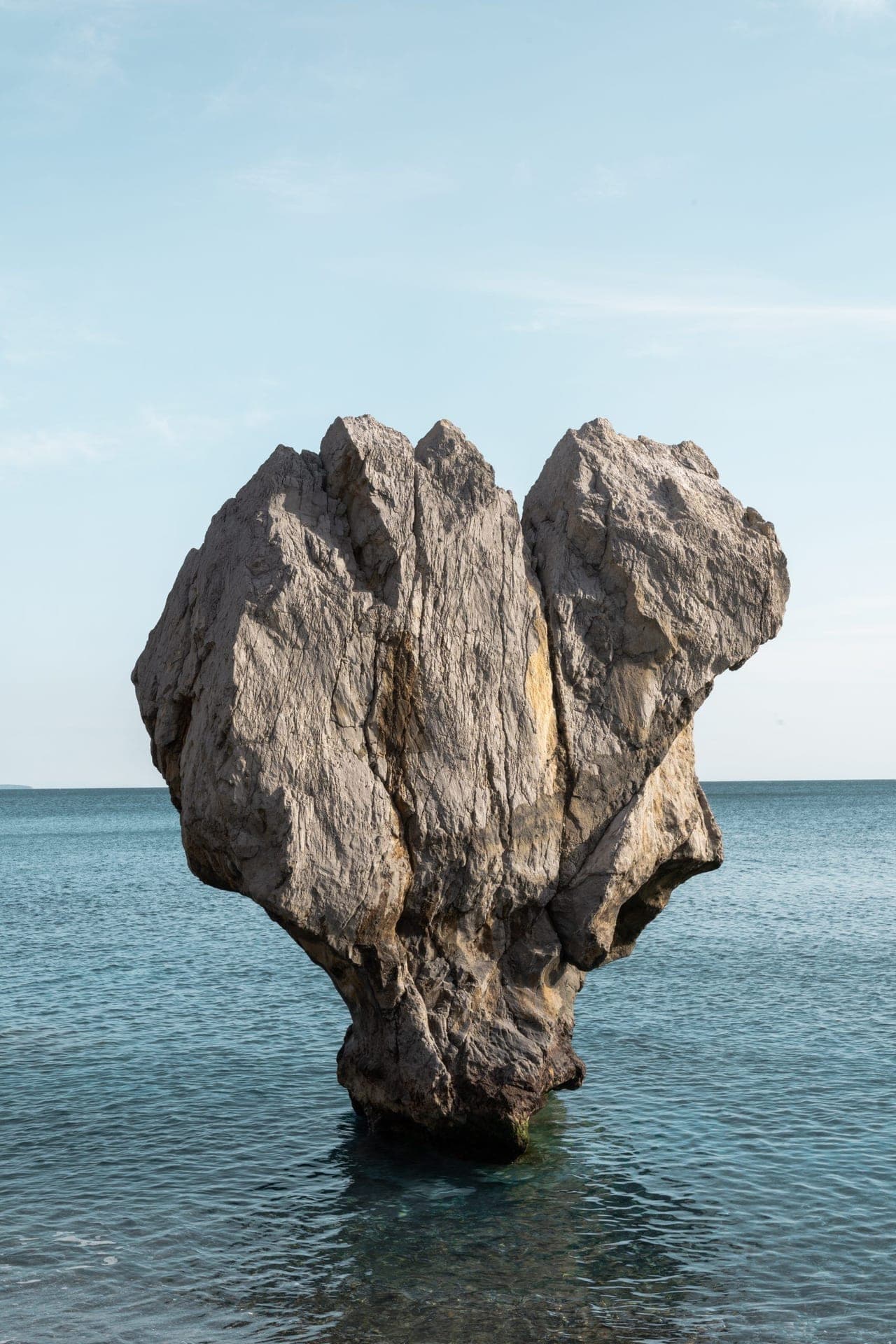
Preveli Beach, also called Palm Beach, lies on the south coast of Crete about 50 minutes from Rethymno, at the point where the Megalopotamos river reaches the Libyan Sea. Behind the sand the river runs inland through a grove of Cretan date palms, Phoenix theophrasti, one of very few places the species grows wild, and the freshwater lagoon between the palms is warm enough to swim in when the sea is not. Access is free, but the beach has no road: it is reached either by a steep stepped path down the cliff from the upper car park, roughly 15 to 20 minutes each way, or by boat from Plakias or Agia Galini.
At a glance
- Entrance fee
- Free; parking at the clifftop car park is charged
- Drive from Rethymno
- About 50 minutes to the upper car park
- Access
- A steep stepped path, 15 to 20 minutes down, or a boat from Plakias or Agia Galini
- Palm species
- Phoenix theophrasti, the native Cretan date palm
- River
- The Megalopotamos, which forms a freshwater lagoon behind the beach
- Open season
- Year-round, though the canteen and sunbeds operate in summer only
The beach and the palm forest
Two things sit side by side here and people usually come for both. On the seaward side there is coarse grey-gold sand, deep blue water and a headland; on the landward side the Megalopotamos comes out of its gorge and runs between hundreds of Cretan date palms, forming a shallow lagoon where the water is fresh and calm. Walking upstream through the grove, in and out of the water, is the part people remember.
The palms are not planted. Phoenix theophrasti is native to Crete and a handful of Aegean sites, and the Preveli grove is one of its largest stands. A wildfire in 2010 burned much of it; the palms regenerated from their bases and the grove has largely recovered.
Getting down
There is no road to the beach. From the upper car park on the cliff a stone and dirt path descends in switchbacks, 15 to 20 minutes down and rather longer back up in the heat, with no shade on the way. Proper shoes matter more here than at any other beach in the region. The alternative is a boat from Plakias or Agia Galini, which lands directly on the sand and removes the climb entirely.
Preveli Monastery
The monastery of Agios Ioannis Theologos stands on the cliffs above, separate from the beach and reached by its own road. It has its own admission charge. Its history is the reason it is on most itineraries: it supported the Cretan resistance during the Ottoman period, and in 1941 the monks sheltered Allied soldiers stranded after the Battle of Crete and helped evacuate them by submarine from the shore below.
Practicalities
Access to the beach is free; parking at the top is charged. There is a small canteen in season, some sunbeds and no other facilities, so bring water. The wind on this coast can be strong in the afternoon and the sea gets rough; the lagoon stays calm regardless, which is why families tend to migrate to it.
Good to know
How do you get to Preveli Beach?+
Either on foot from the clifftop car park, a steep stepped descent of 15 to 20 minutes with no shade, or by boat from Plakias or Agia Galini, which lands on the sand. There is no road to the beach itself.
Is there an entrance fee for Preveli Beach?+
No. The beach and the palm forest are free. Parking is charged, and Preveli Monastery on the cliff above has its own separate admission.
Can you swim in the river at Preveli?+
Yes. The Megalopotamos forms a shallow freshwater lagoon behind the beach, calm and noticeably warmer than the sea, and you can walk and swim upstream between the palms.
How difficult is the walk down?+
Moderate rather than hard, but it is a genuine climb on the way back, on uneven stone with no shade. Trainers or walking sandals, water and a hat are the difference between an easy return and a miserable one.
Is Preveli suitable for children?+
The lagoon is ideal for children; the descent is the limiting factor. Families with small children usually take the boat in and out.
Visit Preveli Beach with us
 Nature
South Crete Highlights
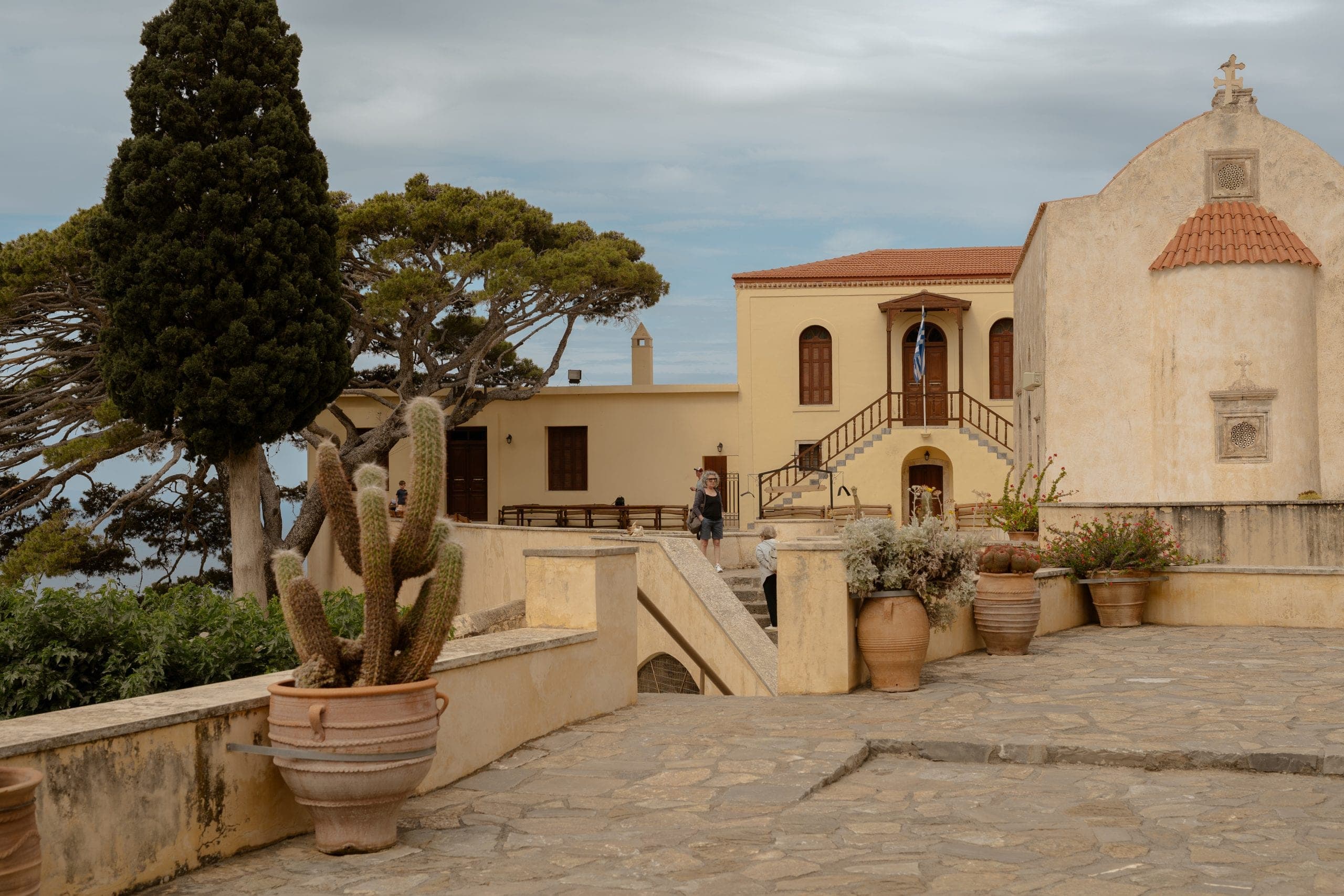
5.0· 62 reviewsSpili's lion fountains, the Kourtaliotiko Gorge, Preveli Monastery and the palm-forest lagoon in one unhurried day.
- 5h
- small group · max 8
- Most days
From €200
Book this tour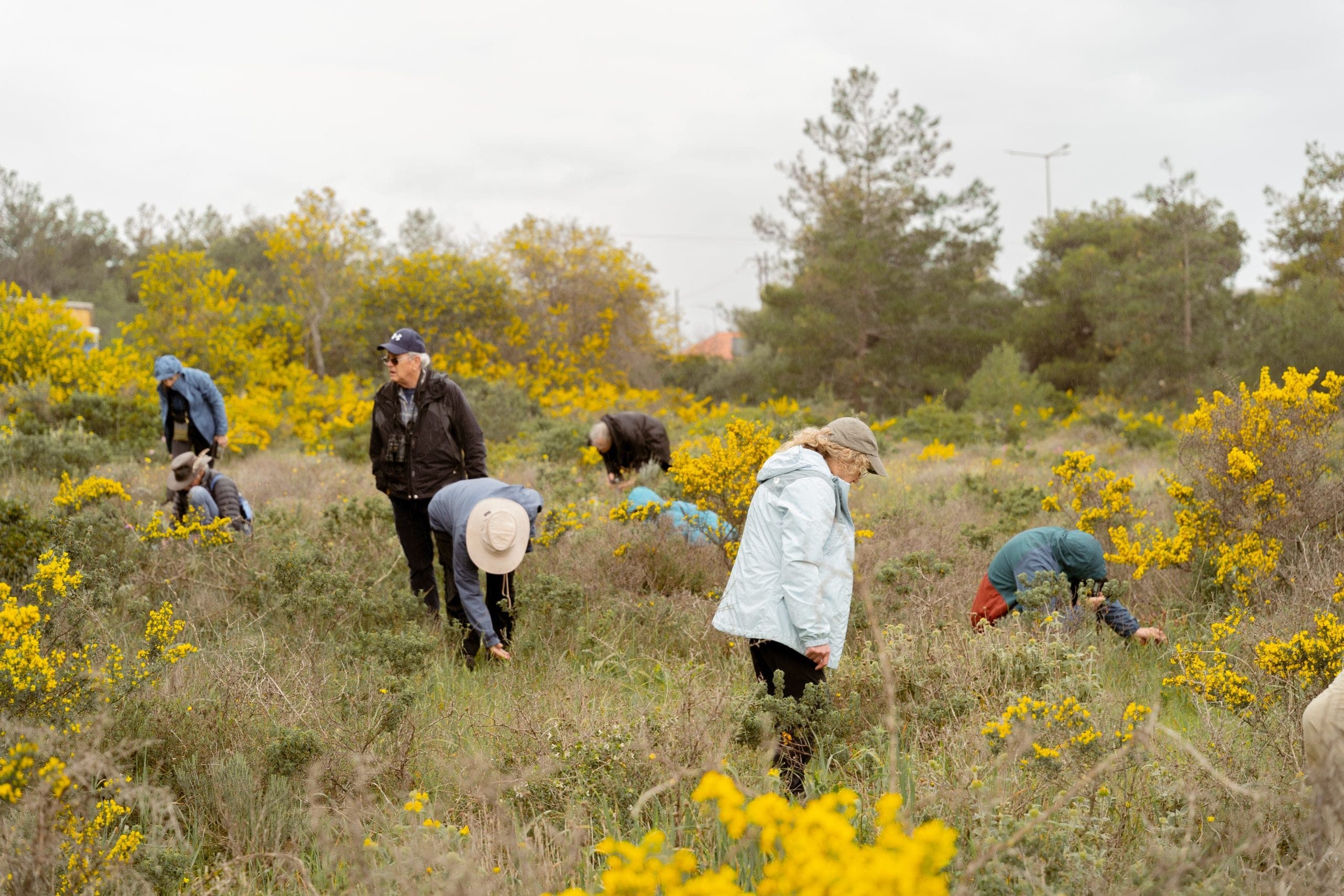 Nature
Spring Wildflowers & Orchids of Crete
5.0· 58 reviewsSeven days of orchid plateaus, gorges and mountain flora, based in Spili, for four to six guests
- 7 days
- small group · max 6
- 1 departure
From €1,490
Book this tourRead more about Preveli Beach
- Is Rethymno Worth Visiting?Yes. Rethymno is worth visiting, and the specific reason is that it is the only city in Crete that gives you three things at once: an intact Venetian and Ottoman old town you can walk end to end in fifteen minutes, a long sandy beach that starts where the old harbour ends, and a position halfway along the island that puts Knossos, Samaria, Elafonisi, Spinalonga, Preveli and the White Mountains all within a day's drive of the same hotel. It is smaller and quieter than Chania, cheaper than either Chania or Heraklion, and - because the University of Crete's humanities campus is here - it stays a working city out of season rather than closing down. The case against it is that it has no airport, its beachfront hotel strip is generic, and its old town is noisy in August.
- Rethymno or Chania: Which Should You Base Yourself In?Choose Chania for a short trip built around the most beautiful harbour in Crete and the beaches and gorges of the far west; choose Rethymno for a longer stay, a sandy beach that starts where the old town ends, lower prices, quieter evenings, and a central position that puts both halves of the island within a day's drive. Chania's old town is larger and more spectacular but also far busier and more expensive, and its own town beach is small, so beach days mean driving 40 to 75 kilometres. Rethymno's old town is smaller and more lived-in, with a stronger Ottoman layer, and its beach runs about 12 kilometres east from the harbour. If you have three days, go to Chania. If you have a week and a car, base in Rethymno and drive to Chania for a day.
- Weddings in Crete: Venues, Paperwork and CostsCrete works as a wedding destination because it has two international airports, a season running roughly from April to late October, and genuinely different settings — a Venetian harbour, an olive grove, a mountain village, a beach on the Libyan Sea — within a few hours' drive of each other. Most foreign couples marry in a civil ceremony conducted by a mayor or authorised civil official, which is a real legal marriage recognised internationally; the work is in the paperwork, which means passports, birth certificates, a Certificate of No Impediment for each party, Apostille legalisation and official Greek translation, submitted to the municipality where you are marrying. Municipal ceremony fees are commonly quoted at roughly €100 to €550, everything else is quote-driven, and the single thing that catches wedding parties out is scale: Crete is about 260 km end to end, guests arrive at two different airports across two or three days, and transport needs planning long before the final numbers are in.
- 12 Best Day Trips from RethymnoRethymno is the best day-trip base in Crete because it sits in the middle of the north coast. Within 45 minutes you can reach Lake Kournas and the Argyroupoli springs, the pottery village of Margarites with Arkadi Monastery, and the south coast at Preveli and Triopetra. Within 90 minutes you reach Imbros Gorge and Knossos with the Heraklion Archaeological Museum. Beyond that, at two hours or a little more, lie Aradaina Gorge, the Samaria trailhead at Omalos, the 2,453 m summit of Pachnes, and the pink lagoon at Elafonisi. Every one of the twelve below is a return trip in a single day.