
Rethymno Old Town is the best-preserved Renaissance quarter in Crete, a compact grid of Venetian and Ottoman streets on the north coast between the Fortezza fortress and a small Venetian harbour with a lighthouse. Nothing in it needs a ticket: the landmarks are the Rimondi Fountain, built in 1626, Porta Guora, the last surviving gate of the city walls, the Neratze Mosque with its minaret, and the harbour itself, all within a ten-minute walk of each other. Venetian doorways, wooden Ottoman balconies and minarets sit above ordinary shops and cafes, and the quarter is still lived in rather than preserved for visitors.
At a glance
- Cost to visit
- Free to walk; the Fortezza charges separate admission
- Rimondi Fountain
- Built in 1626 by the Venetian rector Alvise Rimondi
- Fortezza
- Venetian fortress begun in 1573 on the Paleokastro headland
- Neratze Mosque
- A Venetian church converted after 1646; its minaret is the tallest in Crete
- Porta Guora
- The last surviving gate of the Venetian city walls
- Size
- Walkable end to end in about 20 minutes
The layout
The old town occupies a headland. The Fortezza, the Venetian fortress begun in 1573, closes the northern end; the Venetian harbour with its lighthouse sits on the east side; Porta Guora marks the southern edge where the walls once ran. Everything in between is walkable in twenty minutes if you do not stop, which nobody does.
What to look for
The Rimondi Fountain, 1626, built by the Venetian rector Alvise Rimondi: three lion heads pouring water between Corinthian columns, in a small square that is still the meeting point of the quarter.
Porta Guora, the only piece of the city wall left standing, an arched gate that separates the old town from the modern one.
The Neratze Mosque, a Venetian church converted after the Ottoman conquest of 1646 and given the tallest minaret in Crete. It now serves as the city's music school and concert hall.
The Fortezza, one of the largest Venetian castles built, with a ticketed circuit of walls, the domed Sultan Ibrahim Mosque inside, and views over the sea and the town.
The Venetian harbour, small, curved and lined with tavernas, with the Egyptian-built lighthouse of the 1830s at its mouth.
Eating
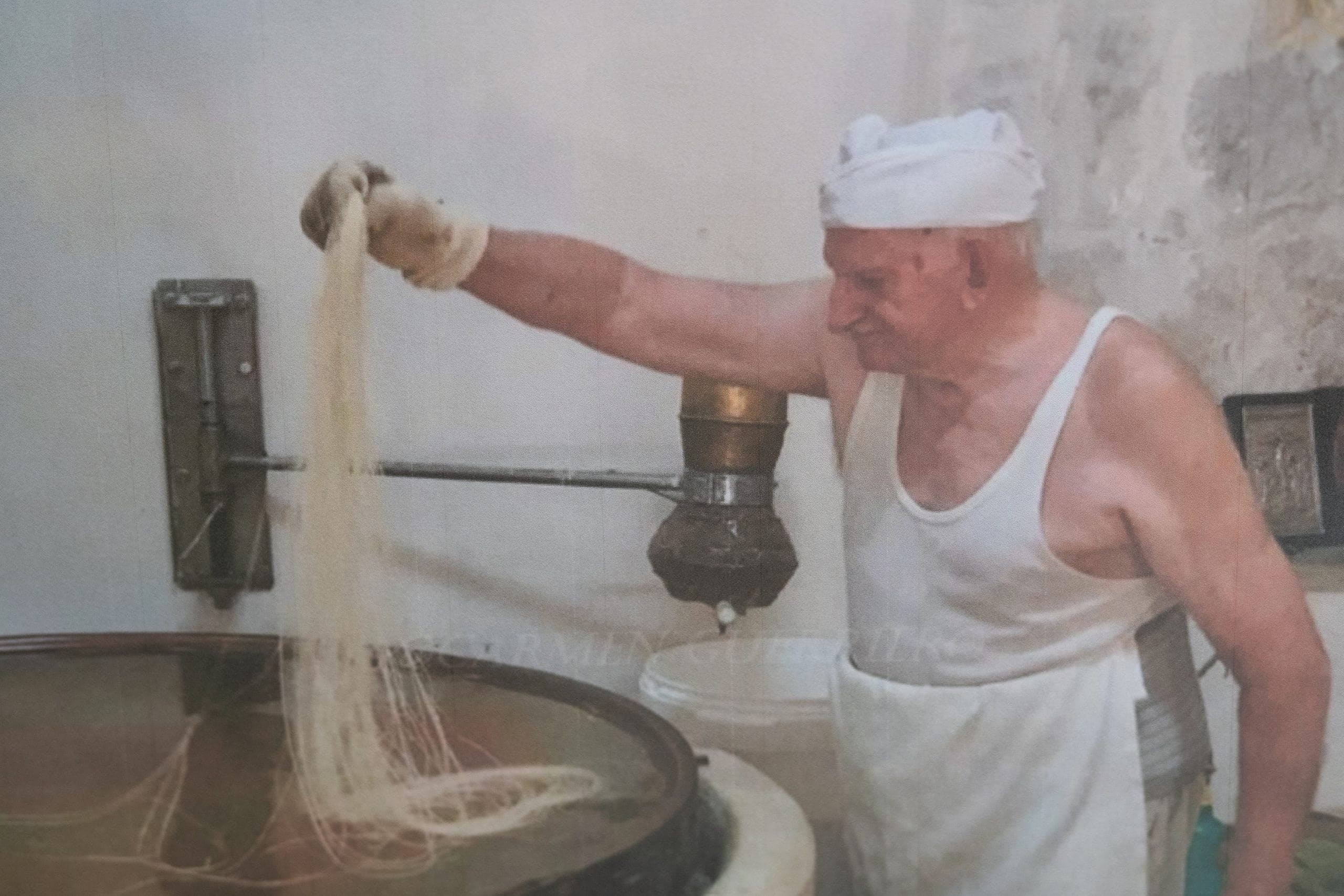
Rethymno is the strongest food town in the region and much of it is in the old quarter: bakeries selling kalitsounia and lichnarakia, the Chatziparaschos family workshop where filo and kataifi have been made by hand for more than sixty years, and tavernas in the back streets that are not on the harbour front and cost half as much.
Practicalities
The old town is pedestrianised in large part and free to walk. The Fortezza charges admission. Cars are best left in the car parks on the edge; the streets inside are narrow, one-way and awkward. Early morning is the time to photograph it without people in the frame.
Good to know
What is there to see in Rethymno Old Town?+
The Fortezza fortress, the Rimondi Fountain of 1626, Porta Guora, the Neratze Mosque and its minaret, and the Venetian harbour with its lighthouse. All of them are within a ten-minute walk of each other and only the Fortezza charges admission.
Is Rethymno Old Town free to visit?+
Yes. The streets, the fountain, the gate and the harbour are all free. The Fortezza has its own entrance fee.
How long do you need in Rethymno Old Town?+
Half a day covers the landmarks at a walking pace with a coffee stop. A guided food walk through it typically runs four hours, ending with lunch.
Why does it look Venetian and Ottoman at the same time?+
Because it is both. Venice held Rethymno from 1204 until the Ottoman siege of 1646, and the Ottomans then ruled until 1898. Rather than rebuild, they converted: churches became mosques, minarets went up beside Venetian facades, and wooden balconies were added to existing houses.
Can you drive into the old town?+
Barely, and it is not worth trying. Much of it is pedestrianised and the rest is narrow and one-way. Use one of the car parks on the edge of the quarter and walk in.
Visit Rethymno Old Town with us
 Food & wine
Rethymno Walk & Taste
5.0· 58 reviewsA four-hour food and history walk through the Old Town
- 4h
- small group · max 8
- Mon, Wed, Thu
From €120
Book this tour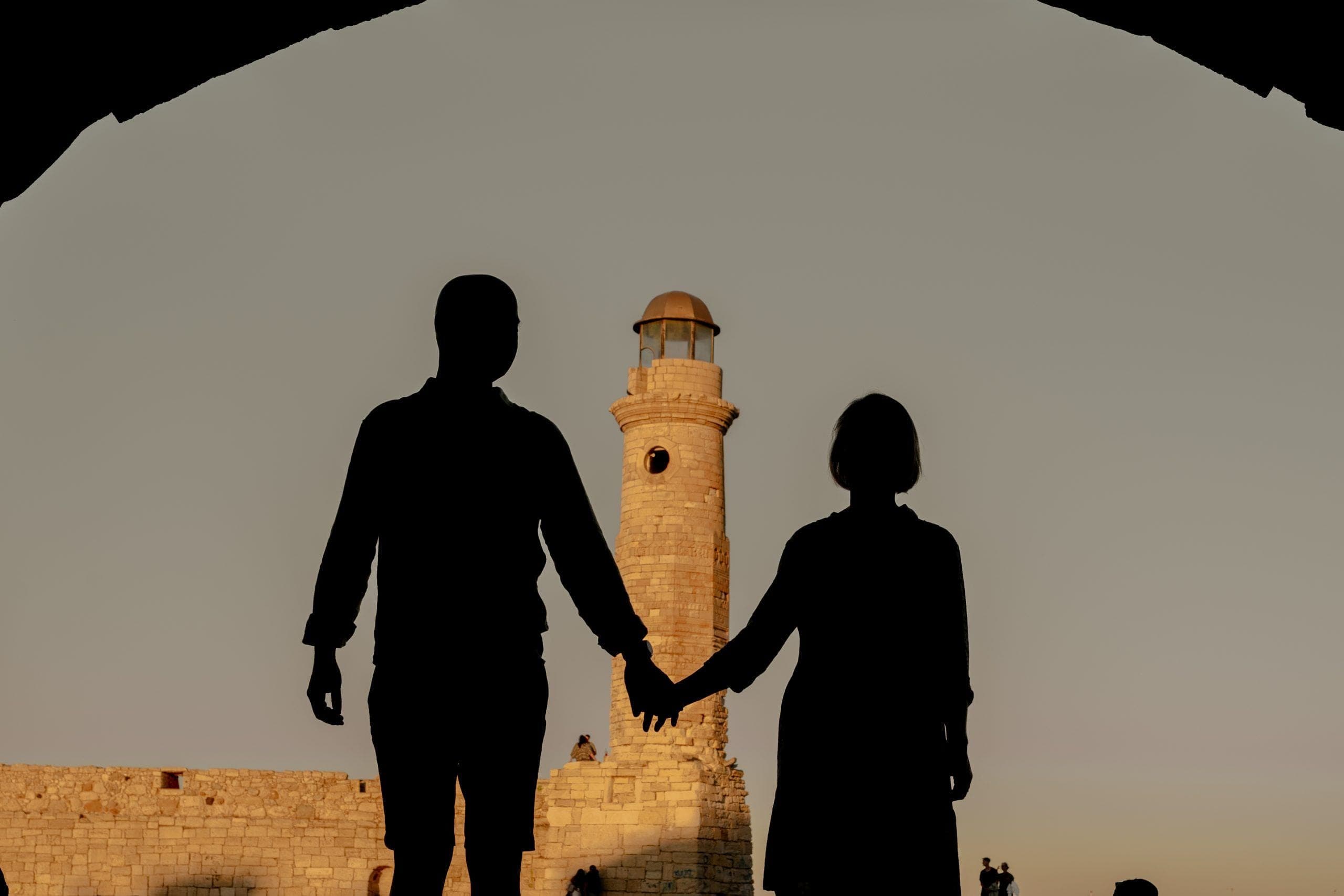 Signature
Romance & History in Rethymno
5.0· 59 reviewsA private evening walk through the old town, photographed as you go.
- 2.5h
- small group · max 2
- Most days
From €320
Book this tourRead more about Rethymno Old Town
- Is Rethymno Worth Visiting?Yes. Rethymno is worth visiting, and the specific reason is that it is the only city in Crete that gives you three things at once: an intact Venetian and Ottoman old town you can walk end to end in fifteen minutes, a long sandy beach that starts where the old harbour ends, and a position halfway along the island that puts Knossos, Samaria, Elafonisi, Spinalonga, Preveli and the White Mountains all within a day's drive of the same hotel. It is smaller and quieter than Chania, cheaper than either Chania or Heraklion, and - because the University of Crete's humanities campus is here - it stays a working city out of season rather than closing down. The case against it is that it has no airport, its beachfront hotel strip is generic, and its old town is noisy in August.
- Rethymno or Chania: Which Should You Base Yourself In?Choose Chania for a short trip built around the most beautiful harbour in Crete and the beaches and gorges of the far west; choose Rethymno for a longer stay, a sandy beach that starts where the old town ends, lower prices, quieter evenings, and a central position that puts both halves of the island within a day's drive. Chania's old town is larger and more spectacular but also far busier and more expensive, and its own town beach is small, so beach days mean driving 40 to 75 kilometres. Rethymno's old town is smaller and more lived-in, with a stronger Ottoman layer, and its beach runs about 12 kilometres east from the harbour. If you have three days, go to Chania. If you have a week and a car, base in Rethymno and drive to Chania for a day.
- What Is Rethymno Like?Rethymno is a working Cretan city of roughly 30,000 people rather than a resort, built around a Venetian and Ottoman old town that you can cross on foot in about fifteen minutes, with a sixteenth-century fortress on the hill above it, a small fishing harbour, and a sandy beach running east for some twelve kilometres. Because the University of Crete's humanities campus is here, several thousand students live in the town, which keeps ordinary cafes, bookshops and restaurants open all year and stops the centre feeling seasonal. The old town is dense, shaded and largely pedestrian, with wooden Ottoman balconies overhanging narrow lanes; the beachfront strip east of it is generic package-holiday architecture and feels like a different place. The pace is slow, lunch is long, and almost nothing important happens before ten in the morning.
- Weddings in Crete: Venues, Paperwork and CostsCrete works as a wedding destination because it has two international airports, a season running roughly from April to late October, and genuinely different settings — a Venetian harbour, an olive grove, a mountain village, a beach on the Libyan Sea — within a few hours' drive of each other. Most foreign couples marry in a civil ceremony conducted by a mayor or authorised civil official, which is a real legal marriage recognised internationally; the work is in the paperwork, which means passports, birth certificates, a Certificate of No Impediment for each party, Apostille legalisation and official Greek translation, submitted to the municipality where you are marrying. Municipal ceremony fees are commonly quoted at roughly €100 to €550, everything else is quote-driven, and the single thing that catches wedding parties out is scale: Crete is about 260 km end to end, guests arrive at two different airports across two or three days, and transport needs planning long before the final numbers are in.