
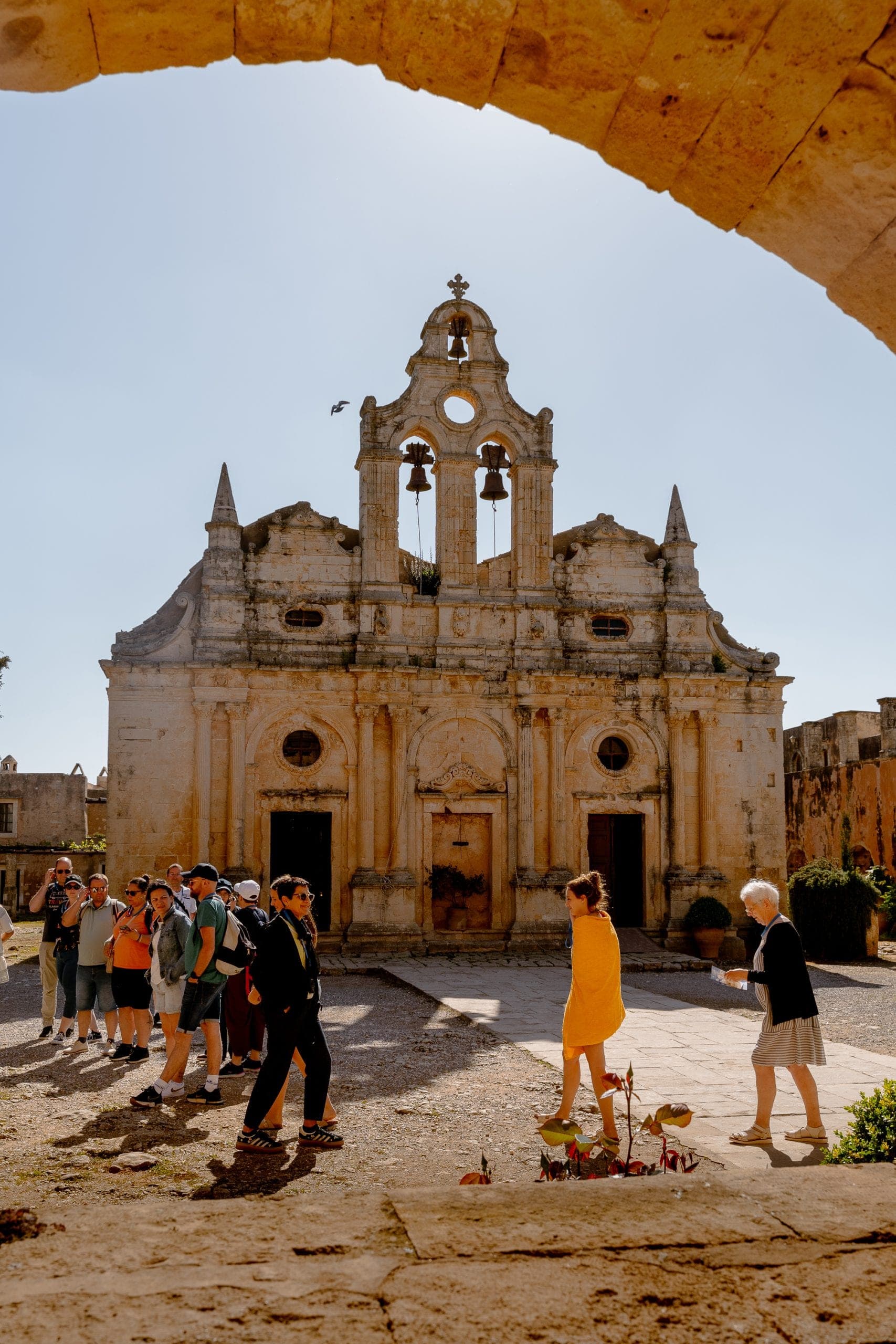
Il monastero di Arkadi sorge a circa 500 metri di quota, sui colli a una trentina di minuti a sud-est di Rethymno, ed è l'edificio più politicamente carico di Creta. La facciata veneziano-barocca della chiesa del XVI secolo compariva sulla vecchia banconota da 100 dracme, ma i cretesi vengono per il novembre 1866: centinaia di combattenti e le loro famiglie, assediati dalle truppe ottomane, fecero esplodere la polveriera piuttosto che arrendersi. L'evento trasformò Arkadi in una causa internazionale e il monastero nell'emblema della lotta cretese per l'unione con la Grecia. C'è un piccolo museo di documenti, armi e reliquie, e un ossario nell'antico mulino a vento fuori le mura.
Aggiungi a un giorno su misura
In sintesi
- Percorso da Rethymno
- Circa 30 minuti, all'incirca 23 km
- Altitudine
- Circa 500 m
- Chiesa costruita
- 1587, con facciata barocca veneziana
- Data chiave
- 8 novembre 1866, quando la polveriera fu fatta esplodere durante l'assedio ottomano
- Biglietto d'ingresso
- Si paga al cancello il giorno stesso; l'importo non è pubblicato sulle pagine dei tour
- Codice di abbigliamento
- Spalle e ginocchia coperte; è un monastero attivo
Perché Arkadi conta
L'8 novembre 1866, con una forza ottomana di molte migliaia fuori le mura, alcune centinaia di cretesi rifugiati nel monastero detonarono il deposito di polvere da sparo sotto di loro. Quasi tutti all'interno morirono, insieme a un gran numero degli assalitori. La notizia raggiunse l'Europa in poche settimane e rese l'autonomia cretese una questione diplomatica, non più una rivolta locale. La data è un anniversario nazionale cretese; l'abate e i combattenti sono commemorati come martiri.
Cosa si vede
La chiesa, costruita nel 1587, ha una facciata a due navate con colonne corinzie, un campanile a tre luci e un frontone, più vicina a un prospetto veneziano che a uno bizantino, ed è esattamente questo. Il cortile intorno è murato, con celle dei monaci, un refettorio che mostra ancora i colpi di sciabola, magazzini e la polveriera senza tetto dove avvenne l'esplosione, lasciata com'era.
Il museo conserva il materiale del 1866: lo stendardo, le armi, i paramenti, le icone e i documenti. Fuori dall'ingresso, l'antico mulino a vento ospita un ossario con i teschi dei caduti.
Il contesto
Il monastero siede tra oliveti e vigneti su un altopiano; la salita dalla costa fa parte della visita. Distano circa 23 chilometri da Rethymno su una buona strada, mezz'ora da porta a porta, e si combina naturalmente con Eleftherna, Margarites e la grotta di Melidoni nella stessa fascia collinare.
Informazioni pratiche
Arkadi è un monastero attivo e all'ingresso si paga un biglietto; l'operatore non pubblica l'importo e si versa sul posto. Spalle e ginocchia devono essere coperte. Un'ora basta per la chiesa, il cortile, il museo e l'ossario.
Buono a sapersi
Cosa accadde al monastero di Arkadi nel 1866?+
Durante la rivolta cretese contro il dominio ottomano, alcune centinaia di combattenti e le loro famiglie si rifugiarono all'interno. Assediati e sul punto di essere sopraffatti l'8 novembre 1866, fecero esplodere la polveriera del monastero, uccidendo se stessi e molti degli assalitori. L'atto rese l'indipendenza cretese una questione internazionale.
Quanto dista il monastero di Arkadi da Rethymno?+
Circa 23 km, all'incirca 30 minuti in auto su una buona strada tra i colli.
C'è un biglietto d'ingresso?+
Sì, il biglietto si riscuote al cancello e si paga il giorno stesso. Non è incluso nei prezzi dei tour e l'importo non è pubblicato sulle pagine dei tour.
Quanto tempo serve ad Arkadi?+
Circa un'ora copre la chiesa, il cortile, il refettorio, la polveriera, il museo e l'ossario nel mulino a vento fuori le mura.
C'è un codice di abbigliamento?+
Sì. È un monastero attivo, quindi spalle e ginocchia devono essere coperte per uomini e donne.
Visitate Monastero di Arkadi con noi
Leggi di più su Monastero di Arkadi
- Vale la pena visitare Rethymno?Sì. Rethymno vale la visita, e il motivo specifico è che è l'unica città di Creta che vi dà tre cose insieme: una città vecchia veneta e ottomana intatta che potete attraversare da un capo all'altro in quindici minuti, una lunga spiaggia di sabbia che inizia dove finisce il porto vecchio, e una posizione a metà isola che mette Cnosso, Samaria, Elafonisi, Spinalonga, Preveli e le Montagne Bianche tutte a una giornata di guida dallo stesso hotel. È più piccola e più quieta de La Canea, più economica de La Canea o Heraklion, e — perché il campus di scienze umane dell'Università di Creta è qui — resta una città che funziona fuori stagione invece di chiudere. Il caso contrario: non ha aeroporto, la fascia alberghiera sul lungomare è generica, e la città vecchia è rumorosa ad agosto.
- Le 12 migliori gite in giornata da RethymnoRethymno è la migliore base per gite in giornata a Creta perché sta al centro della costa nord. In 45 minuti raggiungete il lago Kournas e le sorgenti di Argyroupoli, il villaggio di ceramica di Margarites con il monastero di Arkadi, e la costa sud a Preveli e Triopetra. In 90 minuti siete alla gola di Imbros e a Cnosso con il Museo archeologico di Heraklion. Oltre, a due ore o poco più, ci sono la gola di Aradaina, il punto di partenza di Samaria a Omalos, la vetta del Pachnes a 2.453 m e la laguna rosa di Elafonisi. Tutte le dodici sotto sono andata e ritorno in un solo giorno.
- 20 villaggi belli di CretaI venti villaggi che vale la pena raggiungere in auto a Creta vanno da Maroulas, quindici minuti da Rethymno con le sue case-torri veneziane, a Mochlos sulla costa nord-est a due ore e mezza. Il nucleo essenziale sta entro 45 minuti da Rethymno: Margarites per la ceramica, Argyroupoli per le sorgenti, Spili per la fontana dei leoni a 25 bocche e Anogeia a 740 m per la musica di lira e la cultura dei pastori. Più lontano stanno Archanes nel paese del vino di Heraklion, Zaros sotto il Psiloritis, Kritsa sopra Agios Nikolaos per la tessitura e gli affreschi della Panagia Kera, il villaggio delle castagne di Elos e Loutro a Sfakia, che non ha alcuna strada in entrata o in uscita.
- Quanti giorni servono a Creta?Sette giorni sono il minimo per una vera vacanza a Creta e dieci è il punto in cui l'isola smette di sembrare una serie di lunghe guide. Tre giorni sono un city break confinato a una sola base; cinque aggiungono una gola e un giorno di spiaggia; sette coprono Creta ovest e centrale da un solo hotel, inclusa Samaria o Imbros, Cnosso e la costa sud; dieci permette di spezzare il soggiorno e aggiungere Spinalonga, Elounda e l'altopiano di Lasithi; quattordici è il giro completo dell'isola, con Vai, Kato Zakros e i villaggi senza strada del sud-ovest, Loutro e Agia Roumeli. L'isola è lunga 260 km da un capo all'altro, quindi il vincolo è sempre il tempo di guida, non gli orari di apertura.