
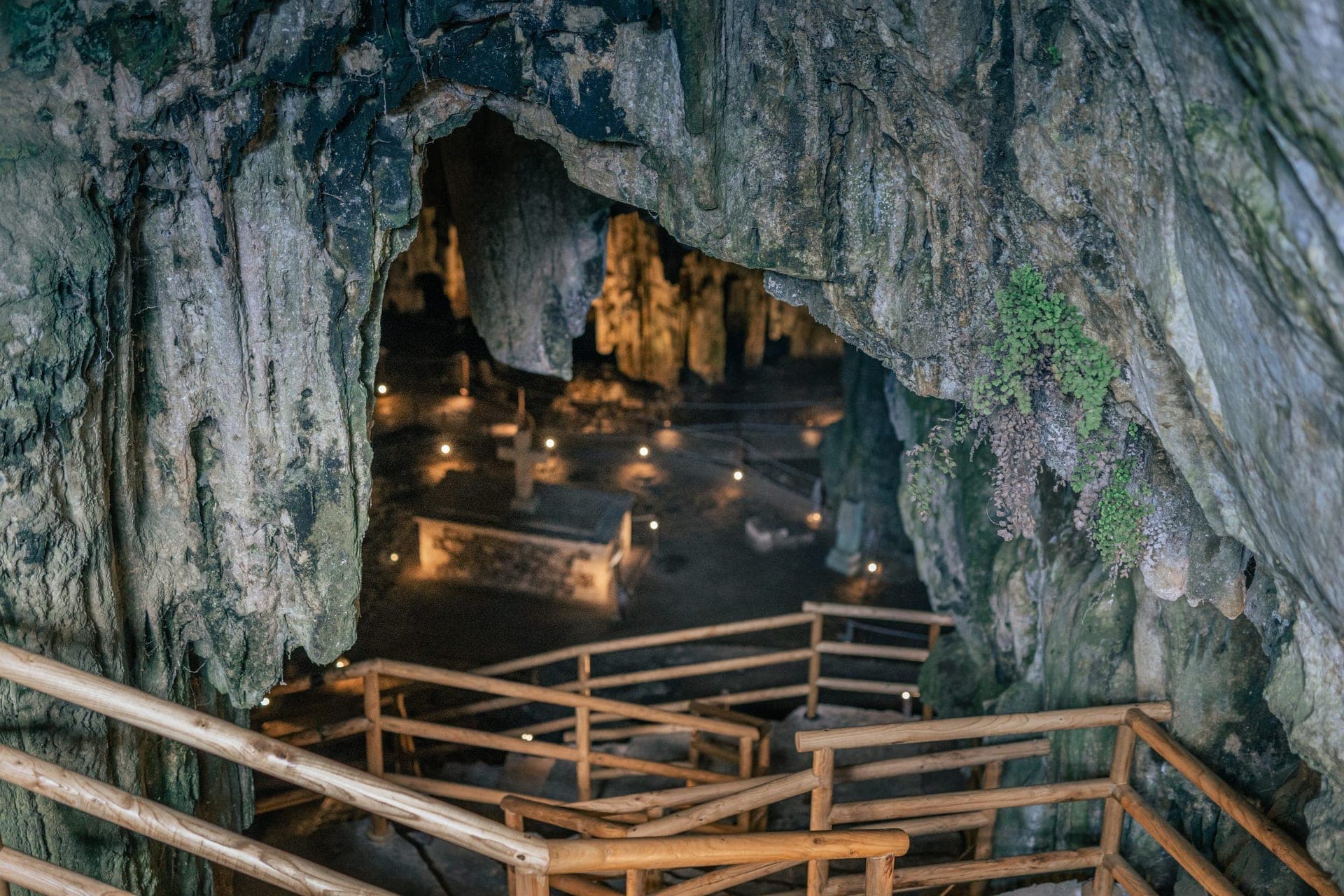
La grotte de Melidoni s'élève au-dessus du village de Melidoni dans les collines de Mylopotamos, à environ 30 minutes à l'est de Rethymno. C'est une seule grande salle de stalactites, non un réseau de galeries, atteinte par un sentier en marches, et elle est en usage depuis le Néolithique : un lieu de culte minoen puis grec lié au géant de bronze Talos, et un refuge pour les villages alentour. En 1824, plusieurs centaines de villageois, surtout des femmes et des enfants, s'y abritèrent des troupes ottomanes et moururent lorsque des feux furent allumés à l'entrée. Un ossuaire et un autel dans la salle principale les commémorent ; la grotte est autant un lieu de pèlerinage qu'un site touristique.
Ajouter à une journée sur mesure
En un coup d'œil
- Trajet depuis Rethymno
- Environ 30 minutes, à peu près 30 km à l'est
- Type
- Une seule grande salle de stalactites, atteinte par un sentier en marches
- Date clé
- 1824, lorsque environ 370 villageois réfugiés à l'intérieur furent tués par les troupes ottomanes
- Usage le plus ancien
- Néolithique ; plus tard lieu de culte minoen et grec lié à Talos
- Droit d'entrée
- Percu sur place et payé le jour même ; le montant n'est pas publié sur les pages des circuits
- Durée de la visite
- Environ 30 minutes dans la salle
La grotte
La visite est courte et verticale plutôt que longue et horizontale. Des marches descendent de l'entrée dans la Salle des Héros, une chambre de dizaines de mètres de large à haut plafond, pendue de stalactites et de colonnes formées sur plusieurs milliers d'années. Elle est éclairée, l'air est frais et humide toute l'année, et le sol est irrégulier par endroits. Il n'y a ni ramper ni matériel de spéléologie.
Histoire
Les fouilles ont livré du matériel dès le Néolithique. Dans l'Antiquité, la grotte était un lieu de culte, lié dans la tradition locale à Talos, le gardien de bronze de la Crète ; des inscriptions à Hermès Tallaios y ont été trouvées.
L'histoire moderne est la raison pour laquelle la plupart des visiteurs viennent. En 1824, pendant la guerre d'indépendance grecque, environ 370 villageois se réfugièrent dans la grotte. Les troupes ottomanes scellèrent et allumèrent des feux à la bouche, et tous ceux qui étaient à l'intérieur suffoquèrent. Leurs restes sont conservés dans un ossuaire de la salle principale, sous un monument de marbre et à côté d'un autel où se tiennent des offices.
Où elle s'inscrit
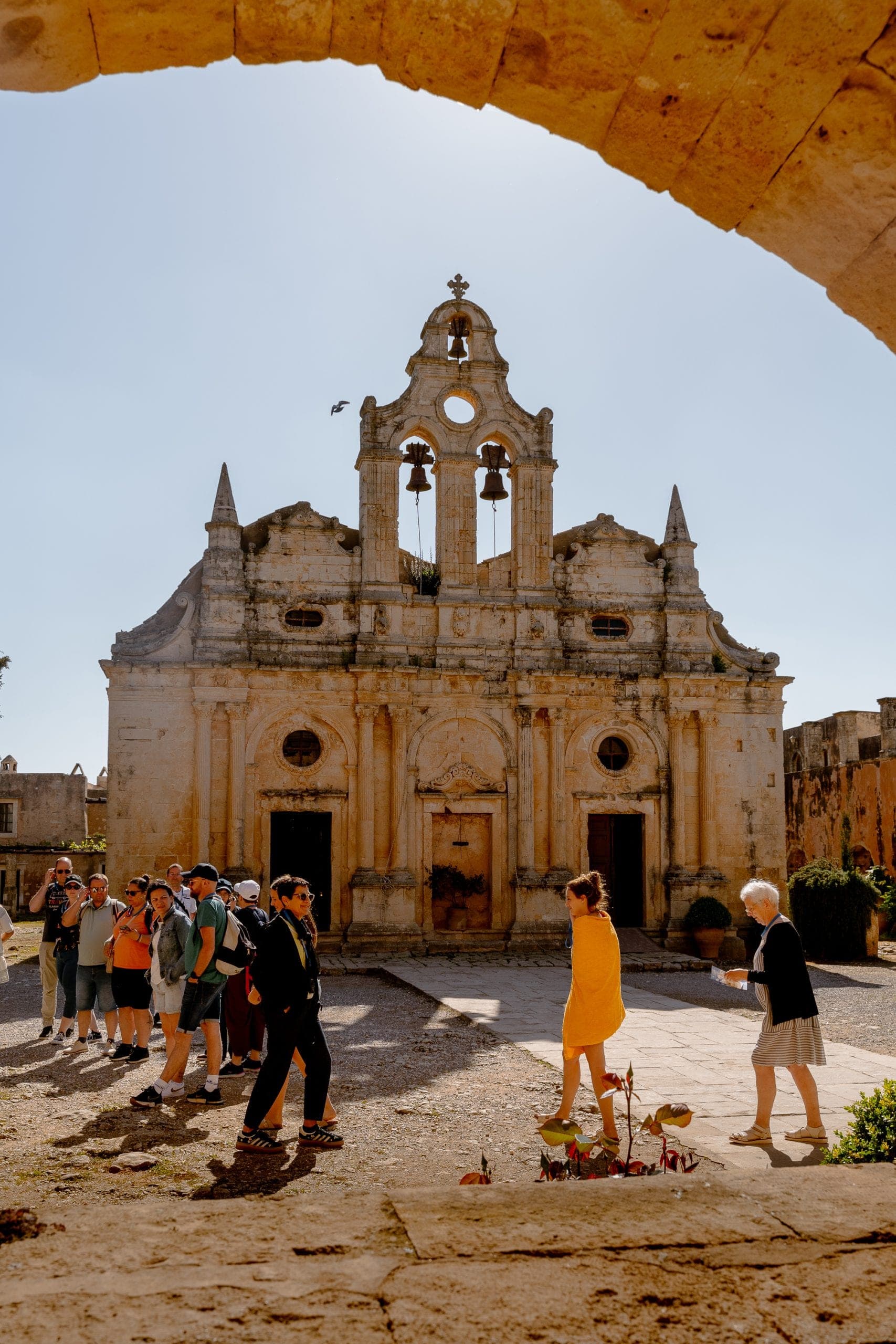
Melidoni se trouve dans les contreforts de Mylopotamos entre Rethymno et Heraklion, à une demi-heure de Rethymno. Elle se combine naturellement avec le monastère d'Arkadi, l'antique Eleftherna et le village potier de Margarites, tous dans le même court circuit de collines et tous des versions de la même histoire de résistance et de continuité.
Informations pratiques
Un droit d'entrée est perçu et payé sur place ; l'opérateur n'en publie pas le montant. Le sentier aller-retour est en marches et peut être glissant : chaussures à semelle accrocheuse. La salle reste fraîche même en août, ce qui en fait un bon arrêt en haute saison. Une demi-heure à l'intérieur suffit.
Bon à savoir
Que s'est-il passé à la grotte de Melidoni ?+
En 1824, pendant la guerre d'indépendance grecque, environ 370 villageois des alentours se réfugièrent dans la grotte. Les troupes ottomanes allumèrent des feux à l'entrée et tous suffoquèrent. Leurs restes sont conservés dans un ossuaire de la salle principale.
À quelle distance se trouve la grotte de Melidoni de Rethymno ?+
Environ 30 km à l'est, à peu près 30 minutes en voiture, dans les collines de Mylopotamos.
La grotte de Melidoni est-elle difficile d'accès ?+
Non. C'est une grotte éclairée et aménagée, atteinte par un sentier en marches, sans ramper ni matériel. Les marches sont irrégulières et peuvent être glissantes : des chaussures à semelle accrocheuse aident.
Combien cela coûte-t-il ?+
Il y a un droit d'admission perçu sur place et payé le jour même. Il n'est pas inclus dans les prix des circuits, et le montant n'est pas publié sur les pages des circuits.
Cela vaut-il la peine avec des enfants ?+
Oui, s'ils sont sûrs sur les marches. La salle est vaste, fraîche et impressionnante, et la visite est courte. L'histoire est sombre : décidez à l'avance combien en raconter.
Visitez Grotte de Melidoni avec nous
En savoir plus sur Grotte de Melidoni
- Les 12 meilleures excursions d'une journée depuis RéthymnonRéthymnon est la meilleure base d'excursions d'une journée en Crète, parce qu'elle se trouve au milieu de la côte nord. En 45 minutes, vous atteignez le lac Kournas et les sources d'Argyroupoli, le village de potiers de Margarites avec le monastère d'Arkadi, et la côte sud à Preveli et Triopetra. En 90 minutes, vous êtes aux gorges d'Imbros et à Cnossos avec le musée archéologique d'Héraklion. Au-delà, à deux heures ou un peu plus, se trouvent les gorges d'Aradaina, le départ de Samaria à Omalos, le sommet du Pachnes à 2 453 m et le lagon rose d'Elafonissi. Chacune des douze ci-dessous est un aller-retour dans la journée.
- Que faire en Crète quand il pleutUn jour humide en Crète est un bon jour pour les parties de l'île qui n'ont rien à voir avec la plage : les grottes de Melidoni, Zoniana et Psychro, souterraines et indépendantes du temps ; des monastères comme Arkadi ; les musées archéologiques et folkloriques de Réthymnon, La Canée et Héraklion ; les domaines viticoles et moulins à huile, des espaces de travail couverts avec dégustation ; les ateliers de poterie de Margarites ; et un cours de cuisine, le meilleur usage d'un après-midi pluvieux. Les vieilles villes de Réthymnon et de La Canée fonctionnent aussi sous la pluie — les ruelles sont étroites, les cafés couverts partout, et la pierre est plus belle mouillée. Avec environ 300 jours de soleil par an, la pluie est surtout un problème de novembre à mars, et même alors elle passe généralement en quelques heures.
- Les montagnes de CrèteLa Crète a quatre systèmes montagneux, pas un. Le Psiloritis (mont Ida) est le plus haut, montant à 2 456 m au Timios Stavros — un massif calcaire karstique avec cinq sommets principaux au-dessus de 2 000 m, désigné UNESCO Global Geopark en 2015. Les Lefka Ori, les Montagnes Blanches de l'ouest, sont les plus grandes et les plus sauvages : environ 57 sommets au-dessus de 2 000 m et à peu près 54 de plus entre 1 500 et 2 000 m, couronnées par le Pachnes à 2 453 m, avec les gorges les plus profondes de l'île taillées à travers. Le Dikti à l'est atteint 2 148 m au Spathi et s'enroule en fer à cheval autour du plateau fertile de Lasithi. Et les Asterousia, au sud de la plaine de la Messara, sont les montagnes les plus méridionales d'Europe — plus basses, à 1 231 m sur le Kofinas, mais plongeant droit dans la mer de Libye. Les quatre sont calcaires, les quatre sont façonnées par des processus karstiques qui envoient l'eau sous terre, et les quatre se marchent le mieux de la fin du printemps au début de l'automne.