
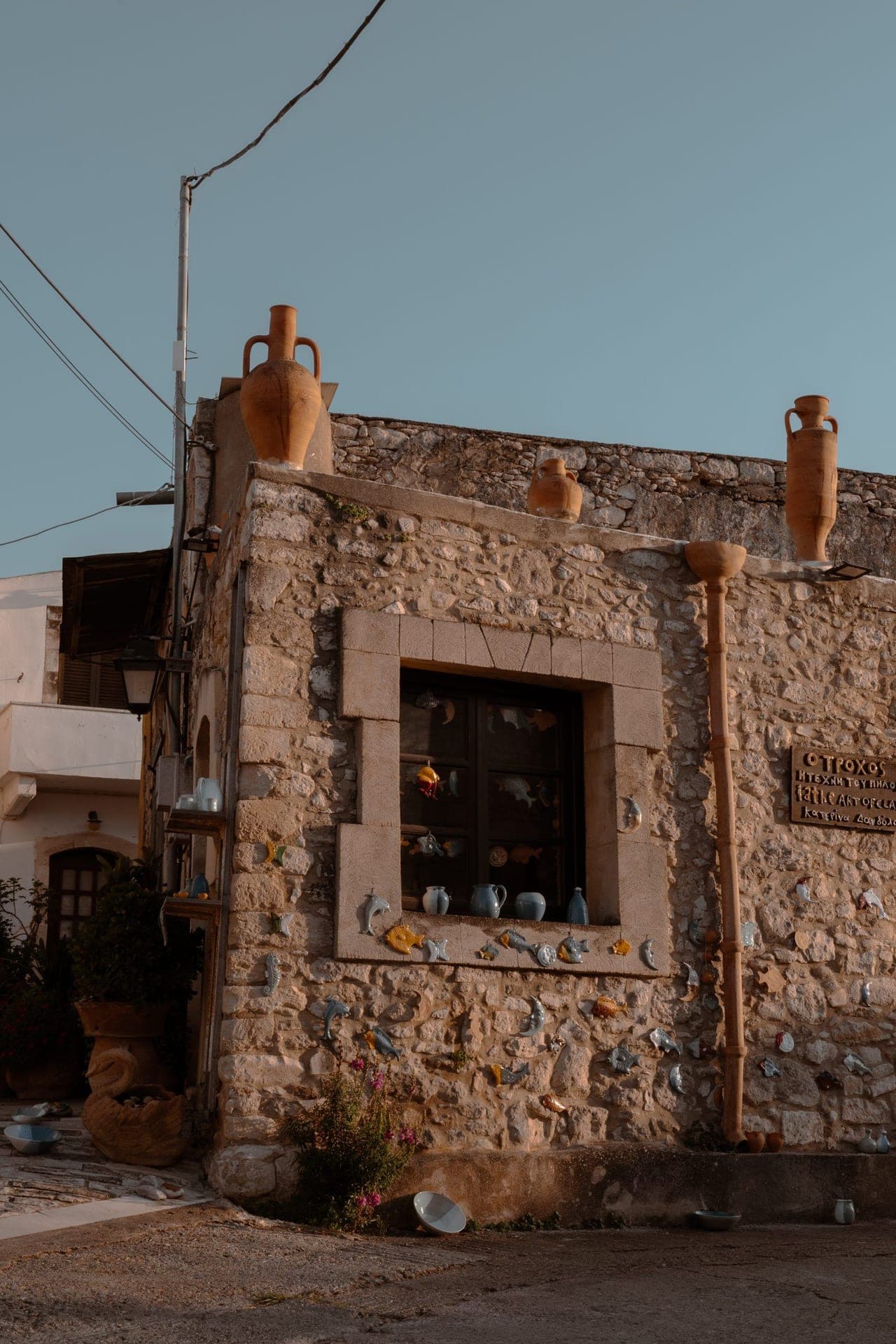
Margarites är en by i sluttningen cirka 30 minuter sydost om Rethymno som har gjort keramik i århundraden och fortfarande gör det. Dragningskraften är inte ett museum utan verkstäder i arbete: ett dussin eller så längs huvudgatan, där krukmakare drejar i det öppna och eldar ugnar på plats, och där det ni köper kommer från den som gjort det. Byn själv är stenhus, smala gränder, bysantinska kyrkor och utsikt över Mylopotamosdalen; det tar ungefär en timme att gå. Besöket är gratis och paras naturligt med Arkadi-klostret, antika Eleftherna och Melidoni-grottan, alla i samma korta slinga.
I korthet
- Kostnad att besöka
- Gratis
- Körtid från Rethymno
- Omkring 30 minuter, ungefär 25 km
- Känt för
- Keramik; ett dussin eller så verkstäder i arbete längs huvudgatan
- Traditionell produkt
- Pithos, det stora kretensiska lagringskärlet för olja, vin och säd
- Tid som behövs
- Omkring en timme att gå genom byn och verkstäderna
- Bästa tid på dagen
- Förmiddag; de flesta verkstäder stänger för en lång eftermiddagspaus
Keramiken
Margarites har lera i marken omkring sig och har arbetat den åtminstone sedan den venetianska tiden. Den lokala traditionen är pithos, det stora lagringskärlet för olja, vin och säd; de största byggdes upp i etapper snarare än drejades och brändes sedan i vedugnar i dagar. Den handeln föll när plast och stål kom; byn lever nu på mindre husgeråd, glaserat och oglaserat, sålt till besökare.
Det som gör resan värd är att verkstäderna verkligen är verkstäder. Hjulen går, ugnar lastas, ofärdiga stycken torkar på hyllor ute. Krukmakare är vana vid att folk tittar och förklarar vanligtvis vad de gör.
Byn
Huvudgatan löper längs en hylla i sluttningen med dalen som faller bort på ena sidan, så nästan varje kaféterrass har utsikt. Det finns bysantinska kyrkor, bland dem Agios Ioannis med fresker från 1300-talet, och den vanliga kretensiska byväven av stenhus, yttre trappor och vinrankor över gränderna. Ett enda torg med ett par tavernor fungerar som mittpunkt.
Att köpa
Priserna är verkstadspriser och styckena varierar i kvalitet eftersom de varierar i tillverkare. Fråga om något är livsmedelssäkert och om glasyren är blyfri om ni tänker använda det snarare än ställa ut det, och räkna med ett rakt svar från krukmakaren.
Praktiskt
Byn är gratis att gå in i och ligger cirka 25 km från Rethymno, en halvtimme med bil. Parkera vid infarten och gå in; huvudgatan är smal. En timme räcker om ni inte stannar för att äta. De flesta verkstäder stänger för en lång eftermiddagspaus, så förmiddagar är den pålitliga tiden att se någon i arbete.
Bra att veta
Vad är Margarites känt för?+
Keramik. Byn har arbetat den lokala leran i århundraden och har fortfarande omkring ett dussin keramikverkstäder i arbete, där ni kan se krukmakare vid hjulet och köpa direkt av dem.
Hur långt är det till Margarites från Rethymno?+
Omkring 25 km österut, ungefär 30 minuter med bil genom Mylopotamoskullarna.
Kan man se krukmakarna arbeta?+
Ja, i de flesta verkstäder, och de är vana vid det. Förmiddagar är mer pålitliga än eftermiddagar, då många stänger för rast.
Finns det en entréavgift?+
Nej. Margarites är en by, gratis att gå in i och runt. Ni betalar bara för det ni köper eller äter.
Vad mer finns i närheten?+
Arkadi-klostret, den arkeologiska platsen och museet i antika Eleftherna samt Melidoni-grottan ligger alla en kort bilresa bort, och de fyra besöks vanligtvis som en dag.
Besök Margarites med oss
Läs mer om Margarites
- 12 bästa dagsutflykterna från RethymnoRethymno är den bästa basen för dagsutflykter på Kreta eftersom den ligger mitt på nordkusten. Inom 45 minuter når ni sjön Kournas och källorna i Argyroupoli, keramikbyn Margarites med Arkadi-klostret och sydkusten vid Preveli och Triopetra. Inom 90 minuter är ni vid Imbrosravinen och Knossos med det arkeologiska museet i Heraklion. Därifrån, på två timmar eller lite mer, ligger Aradainaravinen, Samarias start vid Omalos, Pachnes-toppen på 2 453 m och den rosa lagunen vid Elafonisi. Alla tolv nedan är tur och retur på en enda dag.
- 20 vackra byar på KretaDe tjugo byarna som är värda att köra till på Kreta går från Maroulas, femton minuter från Rethymno med sina venetianska tornhus, till Mochlos på nordostkusten två och en halv timme bort. Den väsentliga klungan ligger inom 45 minuter från Rethymno: Margarites för keramik, Argyroupoli för sina källor, Spili för lejonfontänen med 25 pipor och Anogeia på 740 m för lyramusik och herdekultur. Längre bort ligger Archanes i Heraklions vinland, Zaros under Psiloritis, Kritsa ovanför Agios Nikolaos för vävning och freskerna i Panagia Kera, kastanjebyn Elos och Loutro i Sfakia, som inte har någon väg in eller ut alls.
- Hur många dagar behöver man på Kreta?Sju dagar är minimum för en riktig Kretasemester, och tio är där ön slutar kännas som en serie långa körningar. Tre dagar är en city break begränsad till en bas; fem dagar lägger till en ravin och en stranddag; sju täcker västra och centrala Kreta från ett enda hotell, inklusive Samaria eller Imbros, Knossos och sydkusten; tio låter er dela vistelsen och lägga till Spinalonga, Elounda och Lasithiplatån; fjorton är en full öslinga med Vai, Kato Zakros och de väglösa sydvästbyarna Loutro och Agia Roumeli. Ön är 260 km från ände till ände, så begränsningen är alltid körtid, inte öppettider.
- Saker att göra på Kreta när det regnarEn blöt dag på Kreta är en bra dag för de delar av ön som inte har med stranden att göra: grottorna vid Melidoni, Zoniana och Psychro, som ligger under jord och inte påverkas av vädret; kloster som Arkadi; de arkeologiska och folkloristiska museerna i Rethymno, Chania och Heraklion; vingårdar och oljekvarnar, som är fungerande inomhusmiljöer med provning; keramikverkstäderna i Margarites; och en matlagningskurs, som är det bästa sättet att använda en blöt eftermiddag. De gamla städerna Rethymno och Chania fungerar också i regn – gränderna är smala, takförsedda kaféer finns överallt, och stenen ser bättre ut våt. Med omkring 300 soldagar om året är regn mest ett problem från november till mars, och även då brukar det gå över inom några timmar.