
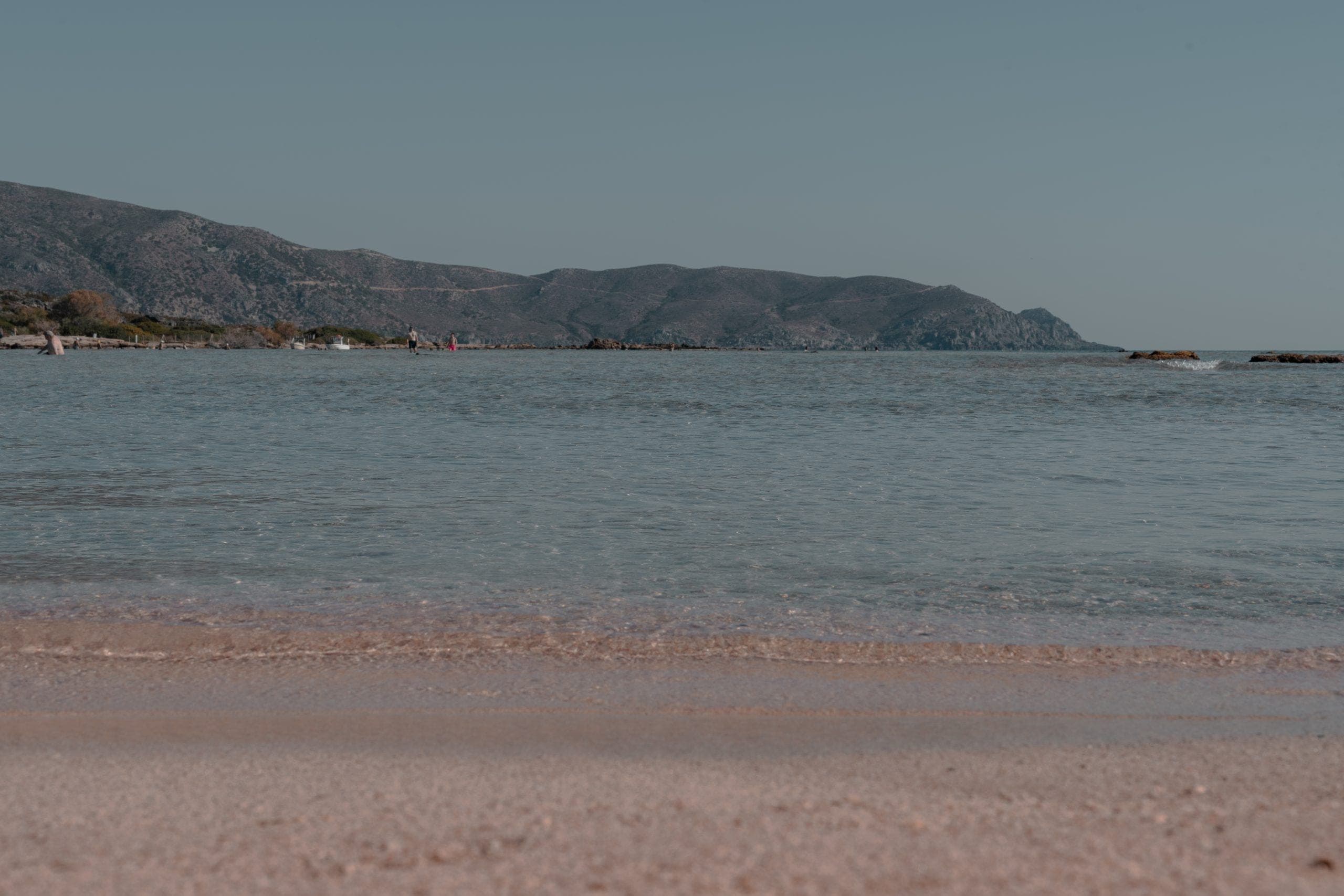
Elafonisi är en rosa sandstrand och en grund lagun längst i sydväst på Kreta, ungefär två och en halv timme med bil från Rethymno. Det rosa kommer från krossade skal av en röd pigmenterad organism blandade i den vita sanden, synliga som band längs vattenlinjen som skiftar med tidvatten och ljus. En lagun på några tiotal centimeter skiljer fastlandsstranden från Elafonisi-ön, ett skyddat naturreservat som ni vadar till på ett par minuter; sanden är rosaare på ön och folkmassan glesnar genast. Entré är gratis, parkering kostar, och körningen är tillräckligt lång för att det ska vara en heldag, inte en eftermiddag.
I korthet
- Entréavgift
- Gratis; parkering kostar under säsong
- Körtid från Rethymno
- Omkring 2 timmar 30 minuter åt vardera hållet
- Övergång till ön
- Vada över en lagun som oftast når vristen eller knät
- Varför sanden är rosa
- Krossade skal av röda foraminifer blandade i vit sand
- Skyddsstatus
- Natura 2000-naturreservat och häckningsplats för karettsköldpadda
- Öppen säsong
- Året runt; solstolar, kiosker och parkeringspersonal arbetar på sommaren
Den rosa sanden
Färgen är äkta och den är inte jämn. Fragment av röda foraminiferskal sköljs upp och blandas med den vita sanden, så det rosa samlas där vattnet nyss varit: i stråk längs stranden, i fickor mellan klippor och mest tillförlitligt på öns sida. Stark middagssol tvättar bort den; morgon och sen eftermiddag visar den bäst. Att ta med sig sand är olagligt, och det är skälet till att färgen bleknat på de mest trafikerade ställena.
Lagunen och ön
Elafonisi-ön ligger en kort bit utanför kusten, skild av vatten som oftast når vristen eller knät. Att vada över tar ett par minuter och är det bästa ni kan göra här. Ön är ett skyddat Natura 2000-område med dyner, havsnarcisser, enbuskar och markerade stigar, tystare stränder på andra sidan och ett minnesmärke över massakern 1824 på kretensare som sökt skydd där. Karettsköldpaddor häckar på dessa stränder, vilket är varför dynerna är inhägnade.
Hitta dit
Det finns ingen genväg. Från Rethymno tar körningen omkring två och en halv timme åt vardera hållet, västerut över ön och sedan ner genom bergen i sydvästra Chania, på vägar som är smala och långsamma sista biten. De flesta resvägar bryter färden vid Topolia-ravinen eller Agia Sophia-grottan ovanför. Att åka tidigt räknas dubbelt: för ljuset på sanden och för en plats på parkeringen.
Praktiskt
Tillträde är gratis; parkering kostar under säsong. Solstolar och parasoller hyrs ut och tar slut snabbt. Det finns kiosker men ingen riktig skugga, så hatt och handduk lönar sig. Faciliteterna är enkla för en så känd plats. Vinden tar i på eftermiddagen längs den här kusten.
Bra att veta
Är sanden på Elafonisi verkligen rosa?+
Ja, men i band snarare än jämnt. Krossade röda skalfragment samlas längs vattenlinjen och i fickor bland klipporna; färgen syns starkast på morgonen och sent på eftermiddagen.
Hur lång är körningen från Rethymno till Elafonisi?+
Omkring två och en halv timme åt vardera hållet. Därför är det en heldagstur: ungefär fem timmars körning kring fyra timmar på stranden.
Kan man gå till Elafonisi-ön?+
Ja. Lagunen mellan fastlandsstranden och ön är normalt vrist- till knädjup och tar ett par minuter att korsa. Sanden är rosaare på andra sidan och det är betydligt tystare.
Finns det en entréavgift?+
Nej. Stranden är gratis att besöka. Ni betalar för parkering, och för solstol och parasoll om ni vill ha dem.
När är bästa tiden att besöka Elafonisi?+
Maj, juni, september och tidig oktober: varmt vatten, mjukare ljus på sanden och långt färre människor än i juli och augusti, då parkeringen fylls vid förmiddagen.
Besök Elafonisi med oss
Läs mer om Elafonisi
- Rethymno eller Chania: var ska ni basera er?Välj Chania för en kort resa byggd kring den vackraste hamnen på Kreta och stränderna och ravinerna i yttersta väst; välj Rethymno för en längre vistelse, en sandstrand som börjar där gamla stan slutar, lägre priser, tystare kvällar och ett centralt läge som sätter båda öhalvorna inom en dags körning. Chanias gamla stad är större och mer spektakulär men också långt mer trafikerad och dyrare, och den egna stadsstranden är liten, så stranddagar betyder 40 till 75 kilometers körning. Rethymnos gamla stad är mindre och mer bebodd, med ett starkare osmanskt lager, och stranden löper ungefär 12 kilometer österut från hamnen. Om ni har tre dagar, åk till Chania. Om ni har en vecka och en bil, basera er i Rethymno och kör till Chania en dag.
- Bröllop på Kreta: lokaler, pappersarbete och kostnaderKreta fungerar som bröllopsdestination för att det har två internationella flygplatser, en säsong ungefär från april till slutet av oktober och genuint olika miljöer — en venetiansk hamn, en olivlund, en bergsby, en strand vid det Libyska havet — inom några timmars körning från varandra. De flesta utländska par gifter sig i en civil ceremoni ledd av en borgmästare eller behörig civil tjänsteman, ett riktigt lagligt äktenskap som erkänns internationellt; arbetet ligger i pappersarbetet: pass, födelseattester, ett hinderfrihetsintyg för varje part, Apostille-legalisering och officiell grekisk översättning, inlämnat till kommunen där ni gifter er. Kommunala ceremoniavgifter anges vanligen till ungefär €100 till €550, allt annat är offertstyrt, och det enda som överraskar bröllopssällskap är skalan: Kreta är cirka 260 km från ände till ände, gäster anländer till två olika flygplatser över två eller tre dagar, och transporten behöver planeras långt innan de slutliga siffrorna är klara.
- 12 bästa dagsutflykterna från RethymnoRethymno är den bästa basen för dagsutflykter på Kreta eftersom den ligger mitt på nordkusten. Inom 45 minuter når ni sjön Kournas och källorna i Argyroupoli, keramikbyn Margarites med Arkadi-klostret och sydkusten vid Preveli och Triopetra. Inom 90 minuter är ni vid Imbrosravinen och Knossos med det arkeologiska museet i Heraklion. Därifrån, på två timmar eller lite mer, ligger Aradainaravinen, Samarias start vid Omalos, Pachnes-toppen på 2 453 m och den rosa lagunen vid Elafonisi. Alla tolv nedan är tur och retur på en enda dag.
- 15 bästa familjestränderna på KretaDe bästa familjestränderna på Kreta kombinerar en skyddad vik med en lång grund hylla, riktig skugga, parkering nära sanden och en taverna inom gångavstånd. Elafonisis knädjupa rosa lagun och de vida grunden vid Frangokastello är de säkraste för småbarn; Georgioupolis, Almyrida, Bali och Agia Pelagia är de mest pålitliga allroundarna; Falassarna, Matala, Malia och Vai passar äldre barn; och Balos, trots att den är spektakulär, är en expedition snarare än en stranddag. Den enskilt mest användbara regeln är att flytta till sydkusten — Damnoni, Plakias, Preveli, Frangokastello — när meltemin blåser från norr i juli och augusti.