
Bröllop på Kreta: lokaler, pappersarbete och kostnader
Ernest ·
Kreta fungerar som bröllopsdestination för att det har två internationella flygplatser, en säsong ungefär från april till slutet av oktober och genuint olika miljöer — en venetiansk hamn, en olivlund, en bergsby, en strand vid det Libyska havet — inom några timmars körning från varandra. De flesta utländska par gifter sig i en civil ceremoni ledd av en borgmästare eller behörig civil tjänsteman, ett riktigt lagligt äktenskap som erkänns internationellt; arbetet ligger i pappersarbetet: pass, födelseattester, ett hinderfrihetsintyg för varje part, Apostille-legalisering och officiell grekisk översättning, inlämnat till kommunen där ni gifter er. Kommunala ceremoniavgifter anges vanligen till ungefär €100 till €550, allt annat är offertstyrt, och det enda som överraskar bröllopssällskap är skalan: Kreta är cirka 260 km från ände till ände, gäster anländer till två olika flygplatser över två eller tre dagar, och transporten behöver planeras långt innan de slutliga siffrorna är klara.
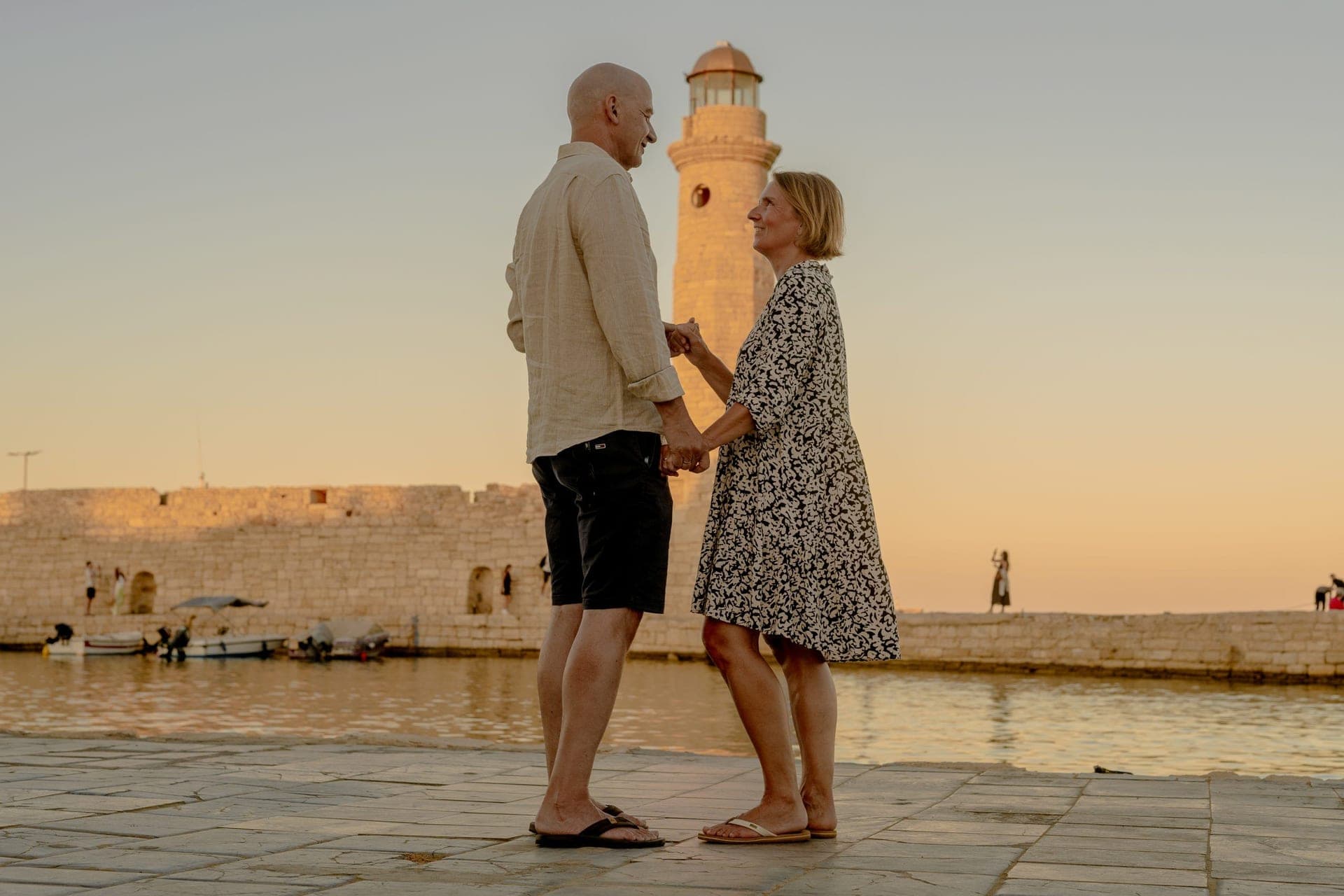
I korthet
- Bröllopssäsong
- Ungefär april till slutet av oktober
- Bästa månaderna
- Maj, början av juni, september och början av oktober
- Kommunal ceremoniavgift
- Vanligen angiven till ungefär €100–€550, beroende på kommun och lokal
- Starta det juridiska pappersarbetet
- Sex till tolv månader före ceremonin
- Registrera äktenskapet
- Hos folkbokföringen, vanligen nämnt som inom 40 dagar från ceremonin
- Flygplatser
- Heraklion och Chania, båda internationella
- Transfertider från Rethymno
- Cirka 1 timme till Chanias flygplats, cirka 1,5 timmar till Heraklion
- Öns längd
- Cirka 260 km från ände till ände
Kreta är en av de mest populära öarna i Grekland för ett destinationsbröllop, och det är inte svårt att se varför. Det har venetianska hamnstäder, bergsbyar, långa kuststräckor, riktig mat och tillräcklig infrastruktur för att flytta hundra gäster utan att improvisera. Det är också stort — betydligt större än de flesta par förväntar sig — vilket är det enda som överraskar bröllopssällskap.
Den här guiden täcker den praktiska sidan: var par faktiskt gifter sig, vad det civila ceremonipappersarbetet innebär, vad det kostar, när man ska göra det och hur ni får gästerna från flygplatsen till ceremonin och tillbaka.
Varför par väljer Kreta
Kreta fungerar som bröllopsdestination av några konkreta skäl. Det har två internationella flygplatser, Heraklion och Chania, med direktflyg från merparten av Europa genom sommaren — så gäster kan vanligen komma dit i ett hopp. Det har en lång säsong, ungefär april till slutet av oktober. Och det erbjuder genuint olika miljöer inom några timmars körning: en venetiansk hamn, en olivlund, en bergsby, en strand vid det Libyska havet.
Det har också en etablerad bröllopsindustri. Kommuner i huvudstäderna hanterar civila ceremonier för utländska par rutinmässigt, och det finns en djup bänk av lokala planerare, fotografer, caterers och lokaler som gör det här varje vecka i säsong.
Var man gifter sig på Kreta
Ön delas in i fyra regioner, och vilken ni väljer formar allt annat — inklusive hur långt gästerna måste resa.
| Region | Flygplatslogik | Passar | Avvägning |
|---|---|---|---|
| Chania och västern | Chanias flygplats nära; Heraklion är ungefär tre timmar bort | Par som vill ha venetiansk gamlastadskaraktär och öns mest fotograferade stränder | Gäster som bokar fel flygplats möter en lång transfer |
| Rethymno och mitten | Cirka en timme från Chanias flygplats, cirka en och en halv timme från Heraklion | Gästlistor fördelade på flyg till båda flygplatserna | Färre stora enplatsresortlokaler än i öster |
| Heraklion, Elounda och östern | Heraklions flygplats | Femstjärniga resortbröllop med allt på en plats; nära Knossos | Längst från det västra landskap de flesta gäster föreställer sig |
| Sydkusten | Vilken som helst, via långsammare bergsvägar | Små bröllop och elopements där miljön spelar mest roll | Långsammare vägar och utspritt boende gör stora grupper svåra |
Chania och västern
Chanias venetianska hamn är vykortsbilden av Kreta, och gamla stan är en av de vackraste i Grekland. Västern har också öns mest fotograferade stränder — Elafonisi och Balos. Det är ett starkt val om platsens utseende spelar mest roll. Avvägningen är att den yttersta västern ligger långt från Heraklions flygplats, så gäster som flyger in på fel flygplats möter en tre timmars transfer.
Rethymno och mitten
Rethymno sitter mellan de två flygplatserna, ungefär en timme från Chanias flygplats och en och en halv timme från Heraklion. Det gör det till den mest förlåtande basen när gäster anländer på flyg till båda. Det har en egen venetiansk gammal stad, en lång stadsstrand och snabb tillgång till traditionella byar, raviner och sydkusten. För ett bröllopssällskap fördelat över flera flyg är logistiken helt enkelt lättare här.
Heraklion, Elounda och östern
Östern är där de stora lyxresorten ligger, särskilt kring Elounda och Agios Nikolaos. Om ni vill ha ett femstjärnigt resortbröllop med allt på en plats är det här änden av ön att titta på. Det ligger också nära Knossos och de stora arkeologiska platserna.
Sydkusten
Tystare, mer kuperad och mindre utvecklad — Plakias, Preveli, Matala, Loutro. Bra för små bröllop och elopements där miljön spelar mer roll än gästantalet. Svårare för stora grupper: vägarna är långsammare och boendet mer utspritt.
Den juridiska sidan: vad ett civilt bröllop på Kreta innebär
Ett civilt bröllop, utfört av en borgmästare, vice borgmästare eller behörig civil tjänsteman, är vägen de flesta utländska par tar. Det är ett riktigt lagligt äktenskap och erkänns normalt internationellt. Pappersarbetet är där tiden går.
Vad ni kommer att bli ombedda om
I stora drag ombeds par vanligen om:
- Giltiga pass — original plus kopior
- Födelseattester för båda parter
- Ett hinderfrihetsintyg (CNI) för varje part, som bekräftar att ni är lagligt fria att gifta er, inhämtat från ert eget lands myndigheter eller ambassad
- Skilsmässodomar eller dödsattester, om någon part har varit gift tidigare
- Ett ansökningsformulär inlämnat till kommunen där ni gifter er
Dokument från utanför Grekland behöver i regel legaliseras — vanligen med en Apostille-stämpel — och officiellt översättas till grekiska av en erkänd översättare. Ceremonin själv hålls på grekiska eller engelska, med tolk vid behov och två vittnen närvarande.
Två tider som överraskar
De flesta råd föreslår att ni startar den juridiska processen sex till tolv månader före bröllopet, eftersom att skaffa och legalisera ett CNI kan ta veckor. Och efter ceremonin måste äktenskapet registreras hos folkbokföringen — vanligen nämnt som inom 40 dagar — för fullt juridiskt erkännande.
Kommunala avgifter för en civil ceremoni anges vanligen i intervallet ungefär €100 till €550, beroende på kommunen och på om ceremonin är i rådhuset eller på en godkänd utomhuslokal.
Bekräfta allt detta direkt. Kraven skiljer sig mellan kommuner och ändras över tid, och de beror på er egen nationalitet. Kontakta kommunen där ni tänker gifta er och ert eget lands ambassad eller konsulat i Grekland tidigt i processen, och — om ni inte bor i Grekland — överväg att arbeta med en lokal bröllopsplanerare som hanterar inlämningarna rutinmässigt. Inget här är juridisk rådgivning.
Vad ett bröllop på Kreta kostar
Kostnaderna varierar enormt, och den som ger er en enda siffra gissar. Det ärliga svaret är att spannet drivs av fyra saker: gästantal, lokaltyp, säsong och hur mycket av arbetet ni lämnar till en planerare.
| Kostnadspost | Vad den täcker | Vad som rör siffran | Publicerad siffra |
|---|---|---|---|
| Kommunal ceremoniavgift | Den civila ceremonin själv | Vilken kommun; rådhus eller godkänd utomhuslokal | Ungefär €100–€550 |
| Dokumenthantering | Översättning, Apostille-legalisering, bud | Er nationalitet och hur många dokument som behöver legaliseras | Offertstyrt |
| Lokal | Platsen och ofta en minimiomsättning | Rådhus-och-taverna i ena änden; privat villa eller resortövertag i den andra | Offertstyrt |
| Catering och dryck | Måltiden och baren | Prissatt per huvud — vanligen den största enskilda posten för ett medelstort bröllop | Offertstyrt |
| Planerare | Samordning och leverantörshantering | Antingen en procent av totalen eller en fast avgift | Offertstyrt |
| Fotografi, blommor, musik, hår och makeup | Dagen själv | Omfattning och säsong | Offertstyrt |
| Gästtransport | Flygplatsankomster, hotell-till-lokal, återfärden, avresor | Gästantal, hur många hotell, hur utspridda flygen är | Offertstyrt — och rutinmässigt underskattat |
En liten ceremoni med ett dussin gäster och en restaurangmiddag är en grundläggande annan budget än ett åttiagästers villabröllop i augusti. Ta offerter för ert faktiska gästantal och datum snarare än att arbeta från ett publicerat genomsnitt.
När man gifter sig på Kreta
Säsongen löper ungefär från april till slutet av oktober. Maj, början av juni, september och början av oktober är sweet spot: varmt, stabilt, långa kvällar och märkbart mindre folkrikt än mitt i sommaren. De flesta planerare kommer att knuffa er hit.
Slutet av juli och augusti är de hetaste och folkrikaste månaderna. Temperaturer inland gör regelbundet en eftermiddagsutomhusceremoni obekväm, flyg och boende är på topppriser, och lokaler bokas slut tidigast. Det kan göras bra — det behöver bara tiderna byggas kring hettan, med ceremonin sent på dagen.
April och slutet av oktober är billigare och tystare, med en verklig chans till regn och svalare kvällar. Bra om ni har en takförsedd reservplan, riskabelt om ni inte har det.
Att få gästerna runt ön
Det här är delen som oftast går fel, och det är värt att planera tidigt.
Problemet är skalan. Kreta är cirka 260 km från ände till ände, och körtiderna är längre än avstånden antyder eftersom mycket av vägnätet är kust- eller bergigt. Gäster kommer att anlända till två olika flygplatser, på flyg utspridda över två eller tre dagar, och de kommer inte alla att bo på samma hotell. Kollektivtrafiken mellan regioner är begränsad och går inte efter flygtidtabeller.
I praktiken behöver ett bröllopssällskap transport för fyra skilda rörelser:
- Ankomster — flygplats till boende, utspritt över många separata flyg
- Bröllopsdagen — flera hotell till en lokal, tidsatt till ceremonin
- Återfärden — lokal tillbaka till boendet, sent, efter en lång kväll
- Avresor — boende till flygplats, återigen utspritt
Att låta gäster ordna egna taxibilar fungerar för ett sällskap på tio och faller isär någonstans kring trettio. Därutöver är samordnad gruptransport både billigare per huvud och långt mer sannolik att få alla till ceremonin i tid.
Way to Crete hanterar precis det här. Vi är baserade i Rethymno och kör bröllopstransfer och gästtransport — flygplatstransfer från Heraklion och Chania, hotell-till-lokal-transport på dagen, återfärden efteråt och privata utflykter för gäster som stannar på båda sidor av bröllopet. Observera att vi verkar inom Rethymno-regionen, inklusive transfer till och från båda flygplatserna; vi kör för närvarande inte transfer inom Chania-, Heraklion- eller Lassithi-regionerna.
Ge era gäster något att göra
De flesta bröllopsgäster stannar merparten av en vecka, och ett destinationsbröllop är lättare att sälja om det finns mer än en kväll. En grupputflykt dagarna kring bröllopet — en mat- och vindag, en by- och klostertur, en matlagningskurs — gör mer för helgen än ytterligare en eftermiddag vid poolen, och får folk att prata med varandra före bröllopsdagen själv.
En realistisk planeringstidslinje
| När | Vad som händer |
|---|---|
| 12+ månader innan | Välj region och datum. Förfråga hos lokaler, särskilt för juni till september. |
| 9–12 månader | Boka lokalen. Utnämn en planerare om ni använder en. Starta det juridiska pappersarbetet: kontrollera kraven med kommunen och er ambassad. |
| 6–9 månader | Skicka save-the-dates så att gäster kan boka flyg medan de är billiga. Boka fotograf och catering. Börja skaffa och legalisera dokument. |
| 3–6 månader | Samla gästers ankomstdetaljer: vilken flygplats, vilket flyg, vilket hotell. Då blir transportplanering möjlig. |
| 1–3 månader | Bekräfta slutliga siffror, färdigställ transportschemat och upphämtningspunkterna, bekräfta tider med varje leverantör. |
| Sista veckorna | Lämna in äktenskapslicensansökan personligen som krävs, och circulera transportschemat till gästerna. |
Planerar ni ett bröllop på Kreta?
Om ni organiserar ett bröllop här — som par eller som planerare — och behöver transportsidan hanterad, berätta datum, lokal, gästantal och var folk bor. Vi kommer tillbaka med en plan.
Bra att veta
Erkänns ett civilt bröllop på Kreta juridiskt utomlands?+
Ett civilt bröllop utfört av en borgmästare eller behörig civil tjänsteman i Grekland är ett lagligt äktenskap, och erkänns i allmänhet i andra länder när äktenskapsbeviset har utfärdats och, där det krävs, apostillerats och översatts. Bekräfta de specifika kraven med myndigheterna i ert eget land innan ni reser.
Hur långt i förväg ska vi börja planera ett bröllop på Kreta?+
De flesta planerare föreslår att ni startar 12 månader i förväg för ett högsäsongsdatum, och börjar det juridiska pappersarbetet sex till tolv månader före ceremonin. Populära lokaler i Chania och Rethymno bokas slut väl över ett år i förväg för juni till september.
Vilken är den bästa månaden att gifta sig på Kreta?+
Maj, början av juni, september och början av oktober är de vanliga rekommendationerna — varmt och stabilt men utan topphettan och folkmassorna i slutet av juli och augusti. April och slutet av oktober är billigare och tystare, med högre chans till ostadigt väder.
Behöver vi vara på Kreta före bröllopsdagen?+
Vanligen ja. Kommuner kräver normalt att paret lämnar in dokument personligen och det finns typiskt en kort väntetid innan licensen utfärdas, så de flesta par anländer flera dagar i förväg. Er kommun bekräftar det exakta kravet.
Vilken del av Kreta är bäst för ett destinationsbröllop?+
Chania och västern passar par som vill ha venetiansk gamlastadskaraktär och dramatiska stränder. Rethymno sitter i mitten av ön och är den lättaste basen om gäster flyger in på båda flygplatserna. Elounda och östern är lyxresortänden. Sydkusten är den tystaste och mest kuperade.
Hur tar sig bröllopsgäster runt på Kreta?+
De flesta gäster flyger in till Heraklion eller Chania och behöver transport till sitt boende, sedan till lokalen och tillbaka på dagen. Kreta är stort och kollektivtrafiken mellan regioner är begränsad, så bröllopsgrupper ordnar vanligen privata eller gruptransfer i stället för att låta gäster organisera individuella taxibilar.
Hur mycket kostar ett bröllop på Kreta?+
Det finns ingen enskild siffra. Den enda publicerade siffran är den kommunala ceremoniavgiften, vanligen angiven till ungefär €100 till €550 beroende på kommunen och på om ni gifter er i rådhuset eller på en godkänd utomhuslokal. Allt annat — lokal, catering, planerare, fotografi, transport — offertställs mot ert faktiska gästantal, datum och lokaltyp.
Turer som nämns i den här guiden
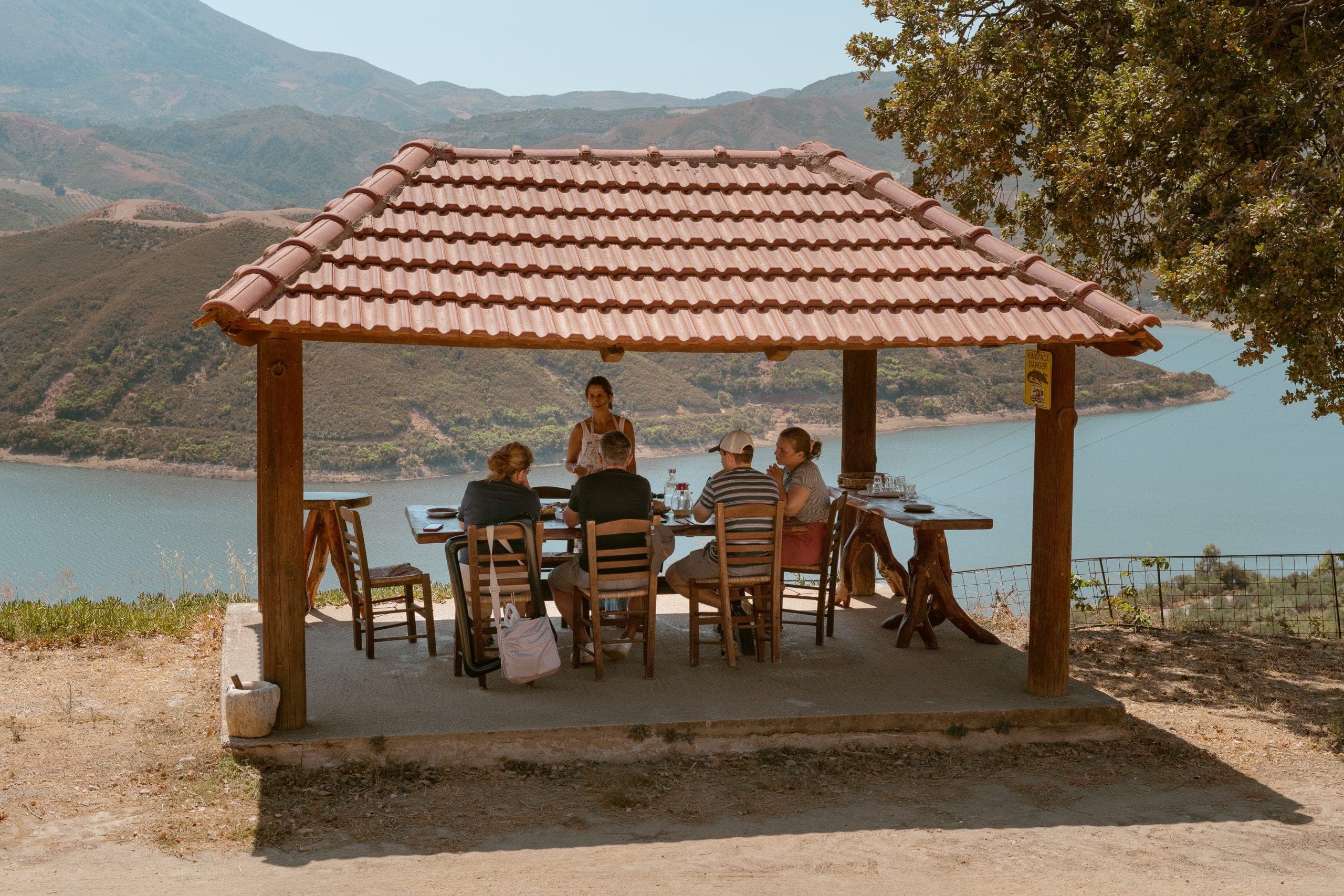 Mat och vin
Kretas smaker
5.0· 61 omdömenHonung, olivolja och lunch, smakade vid källan
- 5 timmar
- liten grupp · max 8
- De flesta dagar
På förfrågan
Boka den här turen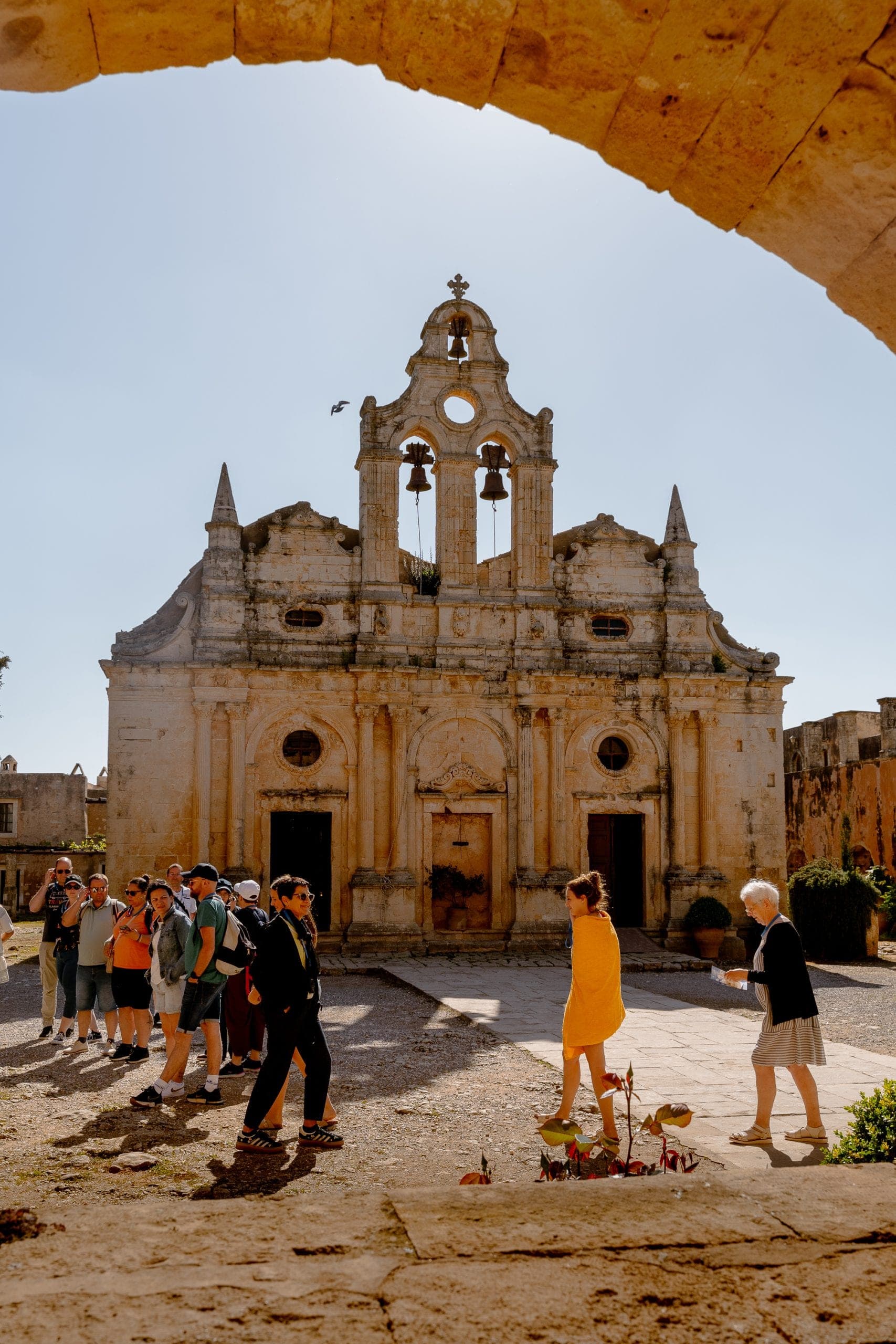 Kultur
Tidlöst Kreta: byar och kloster
5.0· 58 omdömenArkadi, antika Eleftherna, krukmakarna i Margarites och Melidoni-grottan.
- 5 timmar
- liten grupp · max 8
- mån, ons, tor, fre, lör, sön
Från 290 €
Boka den här turen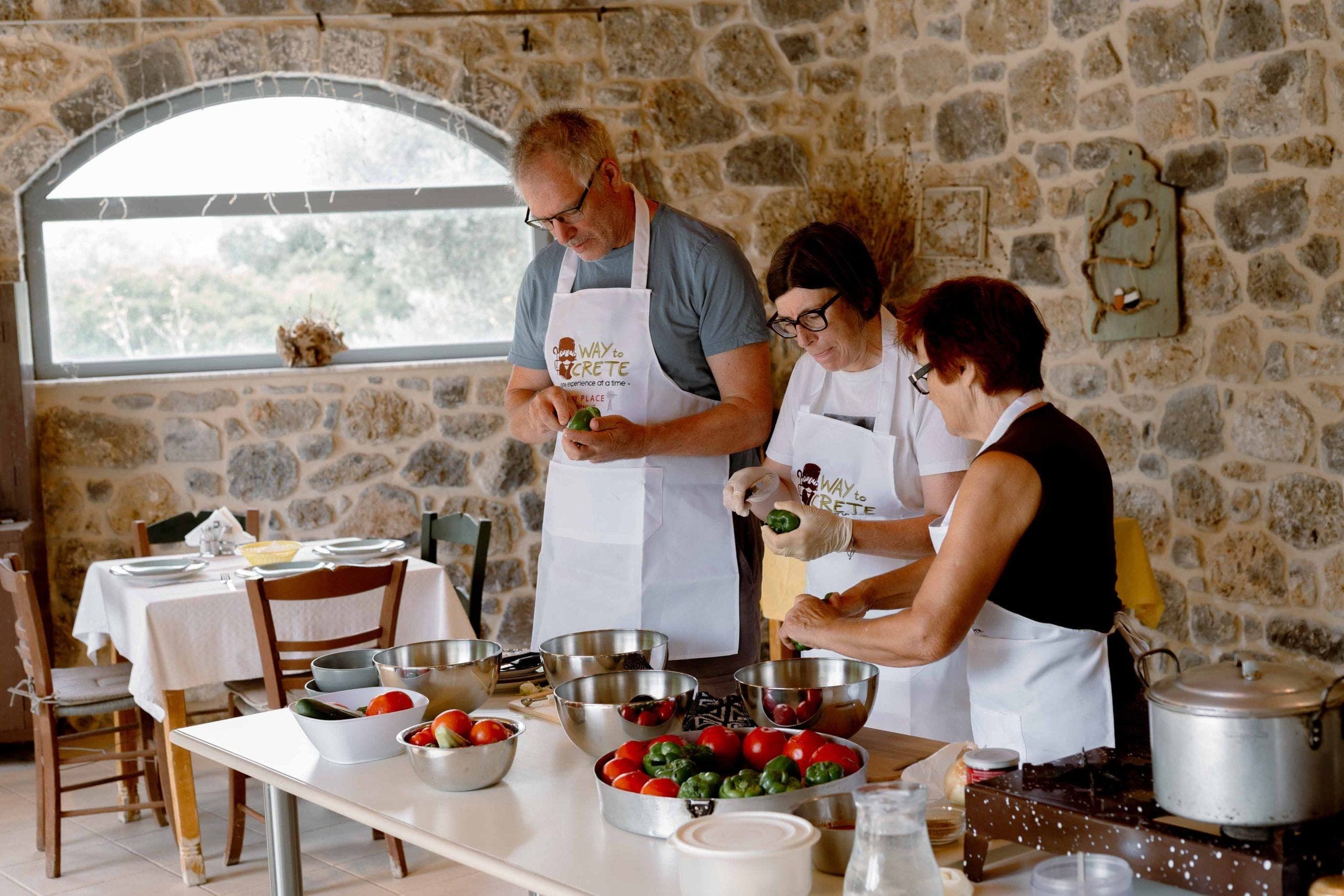 Mat och vin
Äkta kretensisk matlagningskurs
5.0· 58 omdömenEn praktisk dag i ett bykök under Psiloritis
- 5.5 timmar
- liten grupp · max 8
- mån, tor, fre
På förfrågan
Inte tillgänglig Mat och vin
Rethymno Walk & Taste
5.0· 58 omdömenEn fyra timmar lång promenad genom mat och historia i gamla stan
- 4 timmar
- liten grupp · max 8
- mån, ons, tor
Från 120 €
Boka den här turen